
How Affiliate Marketing Fits into a Winning Digital Marketing Strategy

Affiliate marketing generates $12 billion in revenue annually in the United States alone. Yet many businesses still treat it as an afterthought—a nice-to-have rather than a strategic cornerstone of their digital marketing efforts.
This approach leaves money on the table. When executed correctly, affiliate marketing doesn’t just supplement your existing channels; it amplifies them, creates new revenue streams, and builds partnerships that compound your marketing reach exponentially.
Understanding Affiliate Marketing’s Role in Digital Marketing
Affiliate marketing operates on a simple principle: you pay partners (affiliates) a commission for driving specific actions, typically sales, leads, or clicks. These partners promote your products or services through their own marketing channels, expanding your reach without upfront advertising costs.
The beauty of affiliate marketing lies in its performance-based nature. Unlike traditional advertising, where you pay for impressions or clicks that may not convert, affiliate marketing ensures you only pay when desired outcomes occur.
How Affiliate Marketing Complements Other Channels
Rather than operating in isolation, affiliate marketing works synergistically with your existing digital marketing efforts:
Content Marketing Enhancement: Affiliates create additional content about your products, multiplying your content footprint across the web. This increases brand mentions, backlinks, and search engine visibility.
Social Media Amplification: Affiliate partners often have established social media followings in your target demographics. Their endorsements carry the weight of personal recommendations rather than obvious advertising.
Email Marketing Extension: Many affiliates maintain email lists of engaged subscribers. Through affiliate partnerships, your offers reach new, targeted audiences without the time investment of building those lists yourself.
Search Engine Optimization Benefits: Affiliate-generated content and backlinks contribute to your overall domain authority and search visibility, supporting your SEO strategy.
The Strategic Advantages of Affiliate Marketing
Cost-Effective Customer Acquisition
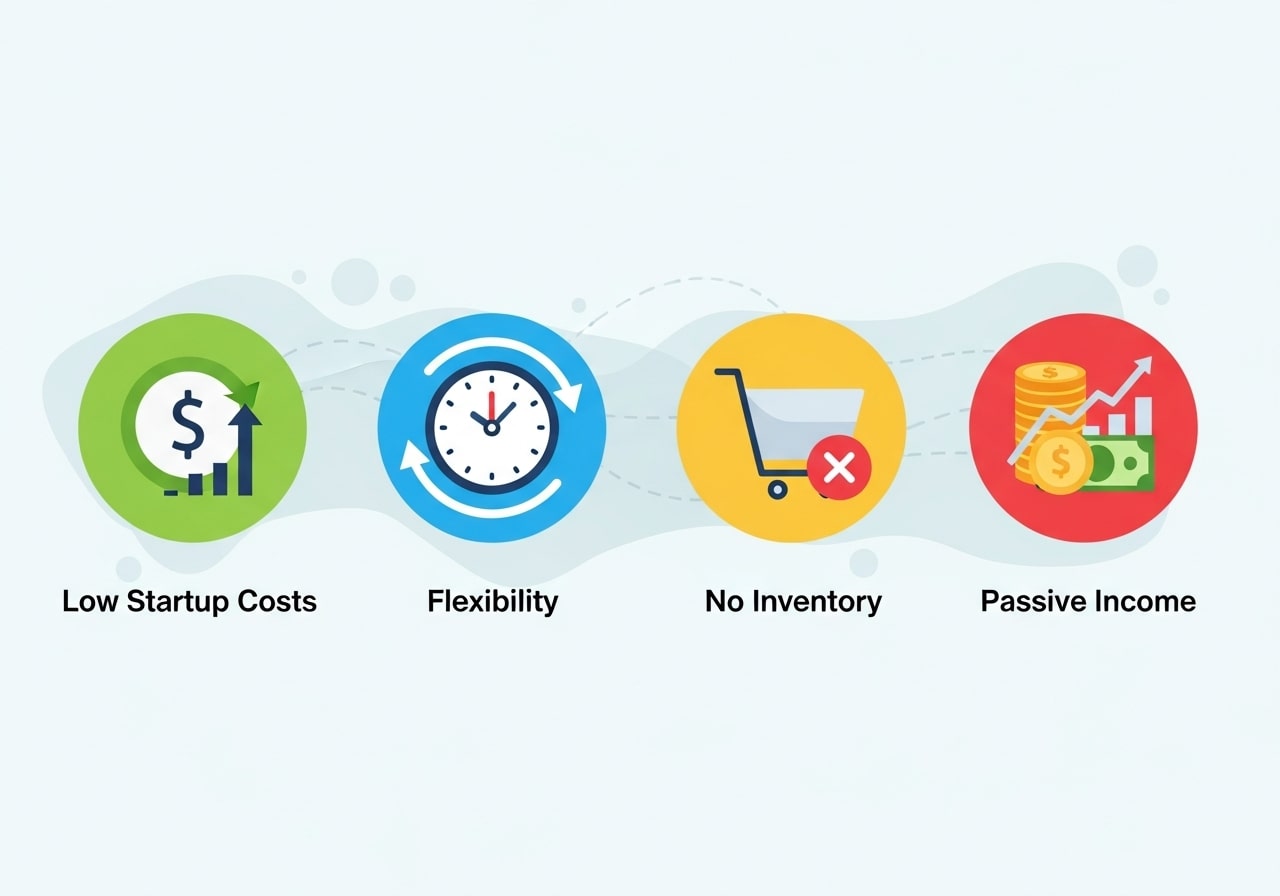
Traditional digital advertising requires upfront investment with uncertain returns. Affiliate marketing flips this model—you only pay after acquiring customers, making it one of the most cost-effective acquisition channels available.
The average customer acquisition cost through affiliate marketing is often 50-80% lower than paid advertising channels, particularly for businesses with optimized conversion funnels.
Risk Mitigation
Digital advertising platforms frequently change their algorithms, policies, and pricing structures. These changes can disrupt campaigns overnight. Affiliate marketing provides channel diversification, reducing your dependence on any single platform.
If Facebook increases ad costs or Google changes its algorithm, your affiliate program continues generating revenue through partner networks that operate independently of these platforms.
Access to New Audiences
Every affiliate partner brings their own audience—people who trust their recommendations and are more likely to engage with endorsed products. This trust transfer is invaluable, as consumers increasingly resist traditional advertising while embracing peer recommendations.
Scalability Without Proportional Resource Investment
Once established, affiliate programs scale efficiently. Adding new partners doesn’t require proportional increases in your marketing team or advertising budget. Partners handle their own marketing efforts while you focus on program management and optimization.
Building an Affiliate Program That Drives Results

Define Your Affiliate Marketing Objectives
Before recruiting partners, establish clear objectives that align with your broader digital marketing goals. Common objectives include:
- Revenue Generation: Direct sales through affiliate channels
- Lead Generation: Building email lists or generating qualified prospects
- Brand Awareness: Increasing visibility and reach in new markets
- Customer Acquisition: Attracting new customers to build lifetime value
Your objectives determine commission structures, partner types, and success metrics.
Choose the Right Commission Structure
Commission structures directly impact partner motivation and program profitability. Common models include:
Percentage of Sales: Affiliates earn a percentage of each transaction they generate. This model aligns partner incentives with your revenue goals.
Fixed Commission: Partners earn a set amount for each conversion. This works well for high-ticket items or when profit margins vary significantly across products.
Tiered Commissions: Higher-performing affiliates earn increased commission rates, encouraging long-term partnerships and continued performance improvement.
Hybrid Models: Combining base commissions with performance bonuses creates additional motivation for top performers.
Identify and Recruit Quality Partners
Not all affiliates are created equal. Focus on recruiting partners whose audiences align with your target demographics and whose promotional methods match your brand values.
Influencers and Content Creators: Partners with engaged followings in your niche can provide authentic endorsements and detailed product reviews.
Industry Publications and Bloggers: Established publications offer credibility and access to readers actively seeking solutions in your space.
Complementary Service Providers: Businesses serving similar audiences with non-competing services make excellent partners for cross-promotion.
Email Newsletter Publishers: Partners with targeted email lists can integrate your offers into their regular communications.
Provide Comprehensive Partner Support
Successful affiliate programs require ongoing partner support. This includes:
Marketing Materials: Provide high-quality banners, product images, email templates, and social media content that partners can use immediately.
Product Training: Ensure partners understand your offerings well enough to promote them effectively and answer basic customer questions.
Performance Data: Regular reporting helps partners optimize their promotional efforts and demonstrates the value of the partnership.
Communication Channels: Maintain regular contact through newsletters, webinars, or dedicated support channels to keep partners engaged and informed.
Leveraging Technology for Affiliate Success

Affiliate marketing relies heavily on technology to track performance, manage partners, and optimize campaigns. Modern affiliate management platforms automate commission payouts, provide real-time reporting, and simplify partner communication. Tools like affiliate dashboards allow marketers to monitor clicks, conversions, and revenue by partner, while integrated analytics identify high-performing affiliates and content. Email automation, link tracking, and fraud detection systems ensure accuracy and prevent misuse. Investing in the right technology not only saves time but also improves transparency, strengthens partner relationships, and enhances ROI. Efficient tools allow marketers to scale their programs confidently and make data-driven decisions.
Nurturing Long-Term Affiliate Relationships

Successful affiliate programs thrive on strong, long-term partnerships. Building trust with affiliates requires consistent communication, timely payments, and recognition of top performers. Providing ongoing education, marketing resources, and exclusive promotions helps partners stay engaged and motivated. Hosting webinars, creating newsletters, and sharing campaign insights encourages collaboration and performance improvement. Long-term relationships also increase brand advocacy, as affiliates genuinely understand and support your products. Retaining loyal affiliates is more cost-effective than constantly recruiting new partners, while also fostering a reliable revenue stream. Consistent support and relationship-building turn affiliates into strategic collaborators, amplifying your marketing reach sustainably.
Integrating Affiliate Marketing with Existing Channels
Content Marketing Integration
Encourage affiliates to create in-depth content about your products—reviews, tutorials, case studies, and comparison articles. This content supports your overall content marketing strategy while providing authentic third-party perspectives.
Cross-link between your content and high-quality affiliate content to strengthen both your SEO efforts and provide additional value to your audience.
Social Media Coordination
Coordinate affiliate social media campaigns with your own social media calendar. This creates multiple touchpoints for potential customers and reinforces your messaging across different voices and platforms.
Consider creating branded hashtags that both you and your affiliates use to increase campaign visibility and tracking.
Email Marketing Collaboration
Share successful email templates and subject lines with affiliates to improve their promotional effectiveness. You can also coordinate email timing to avoid overwhelming shared audience segments.
Consider featuring top affiliates in your own email campaigns to strengthen relationships and showcase social proof.
Paid Advertising Synergy
Use data from successful affiliate campaigns to inform your paid advertising efforts. If certain product features or benefits resonate well in affiliate promotions, incorporate that messaging into your ad copy.
Conversely, share insights from your paid campaigns with affiliates to help them optimize their promotional strategies.
Measuring and Optimizing Affiliate Performance
Key Performance Indicators
Track metrics that align with your affiliate marketing objectives:
Revenue Metrics: Total affiliate revenue, revenue per affiliate, average order value from affiliate traffic
Traffic Quality: Conversion rates, bounce rates, time on site for affiliate-driven traffic
Partner Performance: Top-performing partners, partner retention rates, partner engagement levels
Channel Comparison: How affiliate performance compares to other marketing channels in terms of ROI and customer lifetime value
Optimization Strategies
Regular optimization ensures your affiliate program continues improving performance:
A/B Testing: Test different commission structures, promotional materials, and partner communication strategies to identify what drives the best results.
Partner Feedback: Regularly survey partners to understand barriers to performance and opportunities for improvement.
Competitive Analysis: Monitor competitor affiliate programs to identify trends and opportunities in your market.
Technology Updates: Ensure your tracking and payment systems remain current and user-friendly for partners.
Common Pitfalls and How to Avoid Them
Inadequate Partner Screening
Accepting all applicants without proper vetting can damage your brand reputation. Establish clear partner criteria and review promotional methods before approval.
Poor Communication
Leaving partners without support or updates leads to decreased performance and higher churn rates. Maintain regular communication and provide ongoing value to your partner network.
Inflexible Commission Structures
Rigid commission structures may discourage high-potential partners or fail to motivate continued performance improvement. Build flexibility into your program structure.
Insufficient Tracking and Attribution
Inaccurate tracking leads to partner disputes and lost commissions. Invest in reliable tracking technology and maintain transparent reporting systems.
Transform Your Digital Marketing with Strategic Affiliate Partnerships
Affiliate marketing isn’t just another marketing channel—it’s a force multiplier that amplifies your existing digital marketing efforts while creating new revenue opportunities. When properly integrated into your broader strategy, affiliate partnerships provide cost-effective customer acquisition, risk mitigation, and scalable growth.
The businesses that succeed with affiliate marketing treat it as a strategic partnership channel rather than a passive revenue source. They invest in partner relationships, provide ongoing support, and continuously optimize their programs based on performance data.
Start by defining clear objectives that align with your digital marketing goals, then build a program structure that attracts quality partners and provides them with the tools they need to succeed. With patience and strategic execution, affiliate marketing can become one of your most profitable and sustainable growth channels.
The question isn’t whether affiliate marketing fits into a winning digital marketing strategy—it’s whether you can afford to compete without it.
Frequently Asked Questions (FAQ) – Affiliate Marketing
1. What is affiliate marketing?
Affiliate marketing is a performance-based digital marketing strategy where businesses reward partners (affiliates) for driving desired actions such as sales, leads, or clicks. Affiliates promote products through their own channels, expanding reach while the business pays only for measurable results.
2. How does affiliate marketing benefit a business?
It provides cost-effective customer acquisition, access to new audiences, scalable growth without proportional resource investment, and channel diversification. Affiliates also amplify content, social media, and email marketing efforts while contributing to SEO through backlinks and brand mentions.
3. How do I choose the right affiliates?
Focus on partners whose audiences align with your target market and whose promotional methods match your brand values. Ideal affiliates include influencers, bloggers, industry publications, complementary service providers, and email newsletter publishers with engaged lists.
4. What commission structures work best?
Common models include percentage of sales, fixed commission per conversion, tiered commissions for high performers, or hybrid models combining base rates with performance bonuses. Your choice depends on your revenue goals, product pricing, and affiliate motivation.
5. How can I integrate affiliate marketing with other channels?
Affiliate marketing complements content marketing, social media, email campaigns, and paid advertising. Encourage affiliates to create content, coordinate campaigns across platforms, and share insights to optimize messaging and improve ROI across all channels.
6. How do I track affiliate performance?
Use reliable tracking and reporting tools to monitor key metrics like revenue per affiliate, conversion rates, traffic quality, and partner engagement. Accurate tracking ensures correct commission payouts and highlights top-performing partners.
7. What are common pitfalls in affiliate marketing?
Pitfalls include poor partner screening, inadequate communication, inflexible commission structures, and insufficient tracking. These issues can reduce program effectiveness, create disputes, and harm brand reputation if not properly managed.
8. How do I optimize an affiliate program?
Regularly test commission structures, marketing materials, and partner communications. Collect partner feedback, monitor competitor programs, and update tracking technology. Optimization ensures continuous improvement in performance, ROI, and partner satisfaction.
9. Can small businesses benefit from affiliate marketing?
Yes. Small businesses can start with a focused group of high-quality affiliates to reach targeted audiences without heavy upfront advertising costs. Over time, the program can scale as relationships and results grow.
10. How long does it take to see results?
Affiliate marketing performance depends on partner quality, product type, and program management. Some results, like traffic and sales, may appear within weeks, but long-term growth and ROI typically develop over several months as partnerships mature.