High-Converting Affiliate Funnels: A Step-by-Step Guide
Struggling to turn clicks into commissions? Building high-converting affiliate funnels is the proven method to capture leads, nurture trust, and drive consistent sales automatically.
This comprehensive guide breaks down exactly how to construct high-converting affiliate funnels from scratch. You will learn the anatomy of successful pages, step-by-step creation strategies, common pitfalls to avoid, and expert tips to maximize your return on investment and build lasting audience trust.
Understanding High-Converting Affiliate Funnels
At its core, a sales process designed to guide potential buyers from initial awareness to final purchase is the backbone of digital marketing. High-converting affiliate funnels take this concept and apply it directly to third-party offers. Instead of sending raw traffic straight to an affiliate link—which often results in high bounce rates—these funnels capture the visitor’s information first, allowing for sustained relationship-building.
When you master high-converting affiliate funnels, you stop relying on hope. You build a predictable engine that generates leads, educates prospects, and pitches products smoothly. This approach leverages lead generation strategies and continuous follow-up to maximize the lifetime value of every click you generate.
Why Direct Linking Fails
Many beginners grab an affiliate link and spam it across social media. This direct linking strategy fails for several reasons:
- You have no way to follow up with people who click but do not buy.
- You fail to build personal trust before presenting the offer.
- Advertising platforms like Facebook and Google often penalize or ban direct affiliate links.
- You lose control over the user experience.
High-converting affiliate funnels solve these problems by placing an intermediate step—usually an opt-in page and a bridge page—between the traffic source and the final offer.
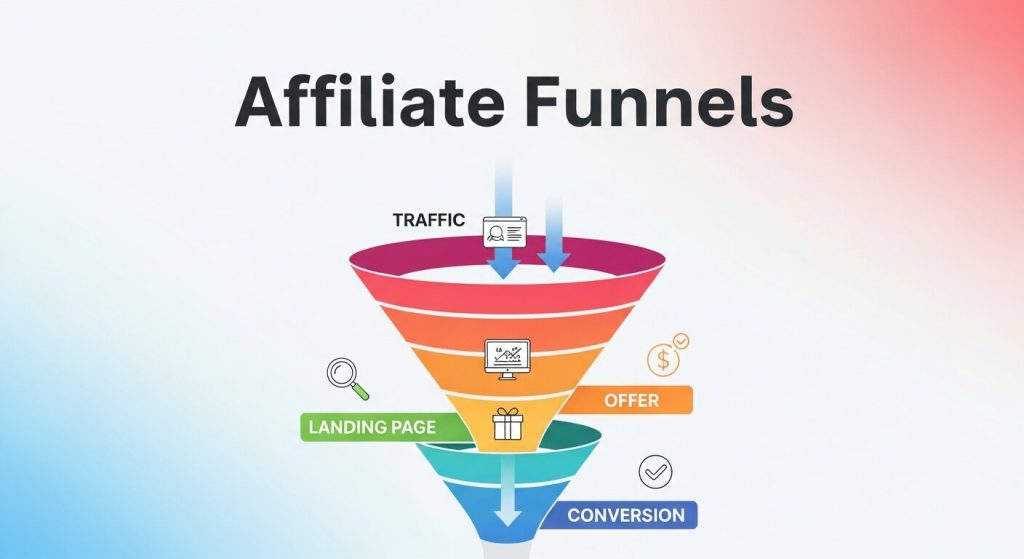
The Anatomy of High-Converting Affiliate Funnels
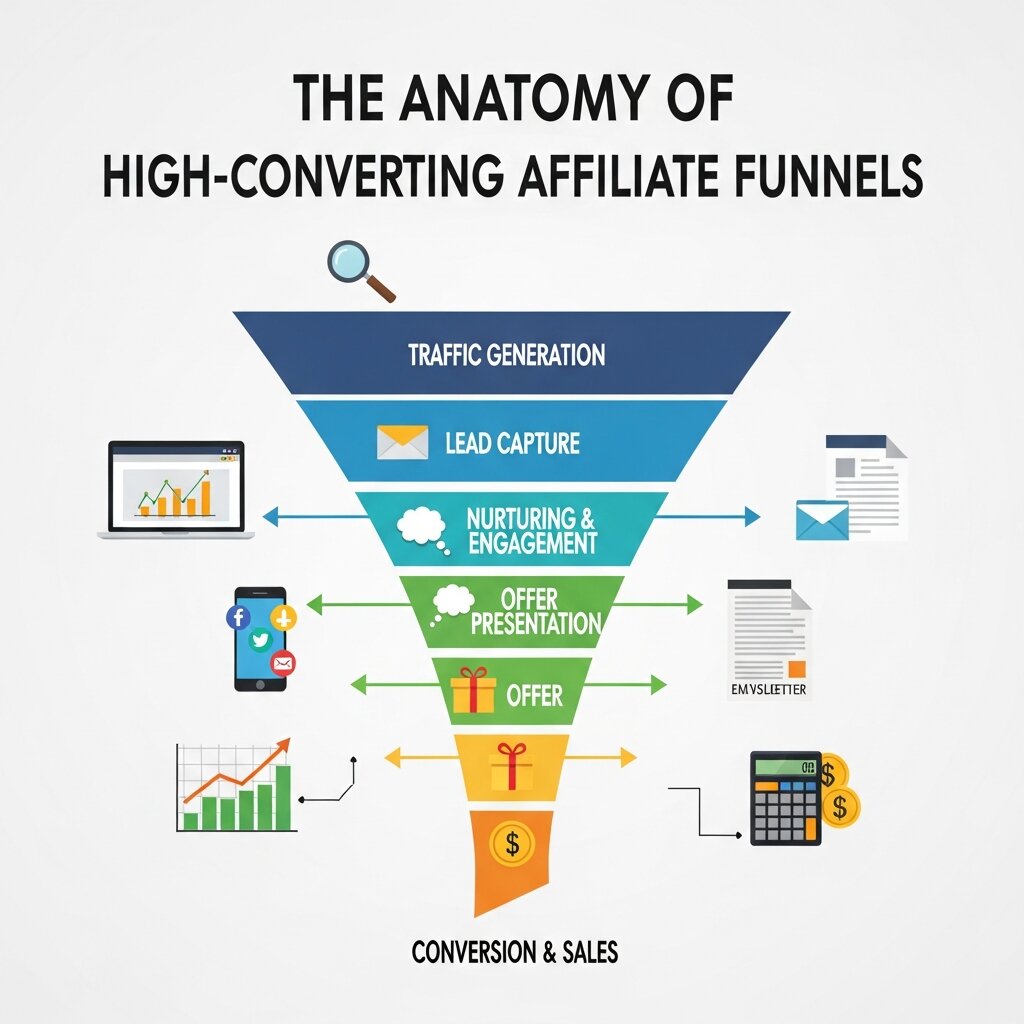
To build a reliable income stream, you must understand the individual components that make up these systems. Every piece serves a specific psychological and technical purpose.
1. The Traffic Source (Top of Funnel)
Everything begins with traffic. You need targeted visitors who actively experience the problem your affiliate product solves. Traffic can be organic (SEO, YouTube, social media) or paid (Facebook Ads, Google Ads). High-converting affiliate funnels rely on high-quality, intent-driven traffic rather than sheer volume.
2. The Opt-In Page (Lead Capture)
The opt-in page, or squeeze page, has one singular goal: capturing an email address. You achieve this by offering a lead magnet—a free piece of value like an ebook, checklist, or mini-course—in exchange for their contact information. Keep this page clean, distraction-free, and focused purely on the benefit of your free offer.
3. The Bridge Page (Pre-Sell)
Once the user subscribes, they land on the bridge page. This is the secret weapon of high-converting affiliate funnels. A bridge page introduces you, delivers the promised lead magnet, and bridges the gap between the user’s problem and the affiliate product you recommend. It often features a short video explaining why you endorse the product, which dramatically increases trust and conversion rate optimization.
4. The Offer Page (Conversion)
After clicking the link on your bridge page, the prospect lands on the actual affiliate sales page. Because you have already pre-framed the offer and built trust, they are highly primed to purchase. You do not control this page, which is why your bridge page copy must be exceptional.
5. The Email Sequence (Backend)
Most people will not buy on day one. High-converting affiliate funnels rely heavily on the backend email sequence. This automated series of emails delivers value, shares case studies, overcomes objections, and gently reminds the subscriber about the affiliate offer over several days or weeks.
Step-by-Step Guide to Building High-Converting Affiliate Funnels
Creating an effective system requires careful planning. Follow these sequential steps to build a funnel that works around the clock.
Step 1: Choose a Profitable Niche and High-Quality Offer
Your funnel is only as strong as the product you promote. Select a niche with high demand and proven buyers, such as wealth, health, or relationships. Partner with reputable affiliate networks or independent programs that offer high commissions, strong sales pages, and low refund rates. Thoroughly research the product to ensure it genuinely helps your audience.
Step 2: Define Your Target Audience
You must intimately understand the people you want to reach. What keeps them awake at night? What solutions have they already tried? Map out their pain points, desires, and objections. This research dictates the angle of your entire funnel, from the ad copy to the final email.
Step 3: Create an Irresistible Lead Magnet
Your lead magnet must solve a specific problem quickly. It should act as a natural stepping stone to your affiliate product. For example, if you promote a fitness app, your lead magnet could be a “7-Day Jumpstart Meal Plan.” Ensure the quality is outstanding; this sets the tone for your brand.
Step 4: Map and Build Your Pages
Use a reliable page builder to construct your opt-in and bridge pages.
- Keep the design clean and mobile-responsive.
- Write a punchy, benefit-driven headline for your opt-in page.
- Include a clear call-to-action (CTA) button.
- On the bridge page, outline three specific reasons why you use and recommend the affiliate product.
- Connect these pages to your email marketing strategies platform.
Step 5: Write Persuasive Email Copy
Draft a 5-to-7-day automated email sequence.
- Day 1: Welcome the subscriber, deliver the lead magnet, and introduce yourself.
- Day 2: Share a personal story or struggle related to their problem.
- Day 3: Introduce the affiliate product as the solution you discovered.
- Day 4: Provide a case study or social proof demonstrating the product’s effectiveness.
- Day 5: Address common objections (price, time, difficulty).
- Day 6: Create urgency or offer an exclusive bonus if they purchase through your link.
- Day 7: Send a final reminder.
Step 6: Launch and Test
Before sending live traffic, test your entire funnel. Subscribe with a test email to ensure the automation triggers correctly. Check that all tracking links work. Once verified, begin driving targeted traffic to your opt-in page.
Comparison: Traditional Affiliate Marketing vs. High-Converting Affiliate Funnels
Understanding the difference highlights exactly why funnels dominate the industry.
|
Feature |
Traditional Direct Linking |
High-Converting Affiliate Funnels |
|---|---|---|
|
Lead Capture |
None |
Captures 20-50% of visitors |
|
Asset Building |
Zero (Platform owns traffic) |
Builds an owned email list |
|
Trust Building |
Minimal to none |
High (via bridge page & emails) |
|
Conversion Rate |
Usually under 1% |
Often 3-5% (front end) + backend sales |
|
Ad Account Safety |
High risk of bans |
Safe (compliant landing pages) |
|
Long-Term Profit |
Low (one-off clicks) |
High (repeat promotions via email) |
Mini-Conclusion: Transitioning from direct linking to proper funnel building requires upfront work, but the mathematical advantage is undeniable. Funnels protect your business from algorithm changes and maximize your ad spend.
Common Mistakes to Avoid
Even experienced marketers stumble. Avoid these critical errors when building high-converting affiliate funnels:
- Overcomplicating the Opt-In: Asking for too much information (like phone numbers or physical addresses) crushes conversion rates. Ask for an email address only.
- Boring Bridge Pages: If your bridge page just says “click here to buy,” you lose the pre-sell advantage. You must explain why the product matters.
- Ignoring the Backend: Relying solely on the first day’s sales leaves massive money on the table. Your email sequence is where the real profit lives.
- Promoting Garbage Offers: High-converting affiliate funnels cannot save a terrible product. Always prioritize E-E-A-T and only recommend trustworthy solutions.
- Neglecting Mobile Optimization: Over half of your traffic will view your funnel on a phone. If buttons are too small or text is unreadable, they will leave immediately.
Pro Tips and Expert Insights for Scaling
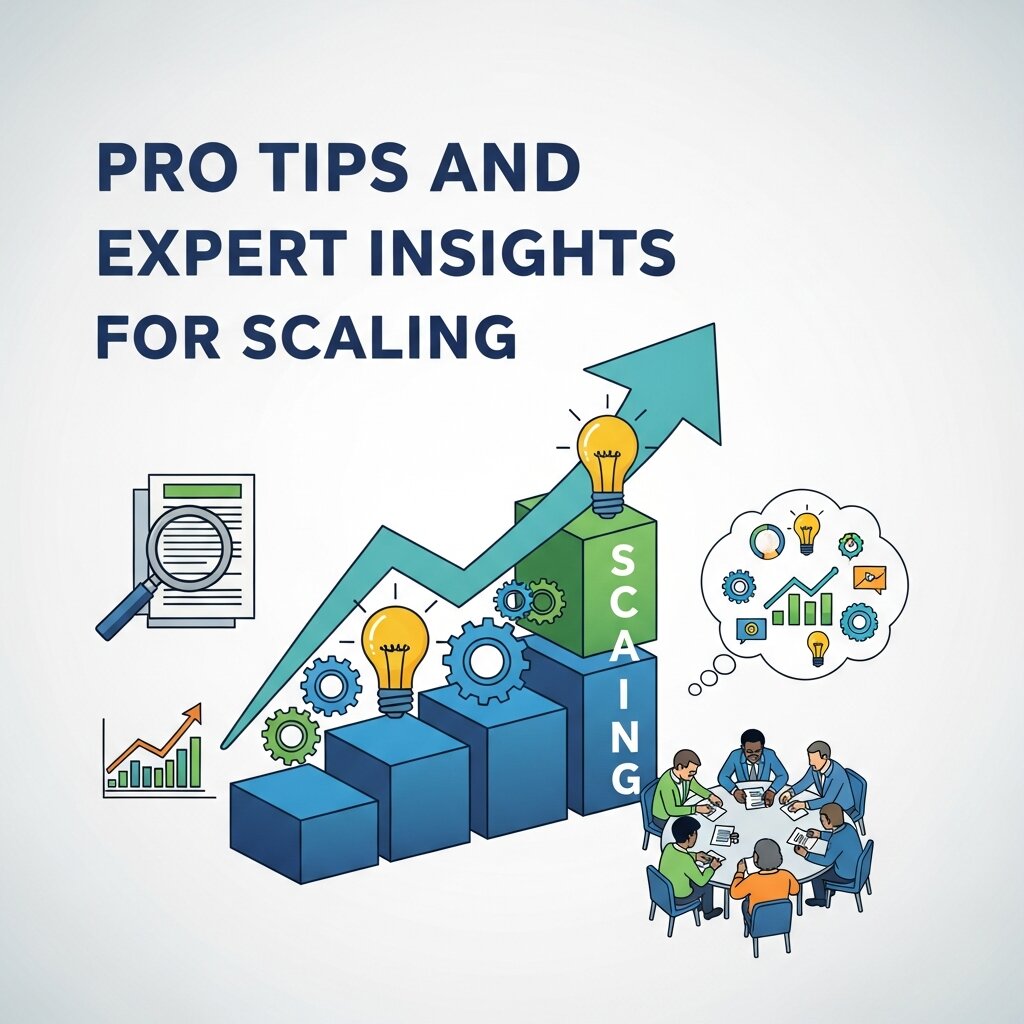
Once your baseline funnel is profitable, use these advanced strategies to scale your operations.
Leverage Affiliate Bonuses
Create custom bonuses for people who buy through your link. This could be exclusive video training, custom templates, or a private community. A strong bonus package makes your offer superior to competitors promoting the same product.
Implement A/B Split Testing
Never guess what works. Continually test your opt-in headlines, button colors, and email subject lines. Improving your opt-in rate from 30% to 40% dramatically lowers your cost per lead. Consistent sales funnel tracking is mandatory for long-term growth.
Segment Your Email List
Not all subscribers are the same. Tag users based on the links they click in your emails. If someone clicks the fitness app link but does not buy, send them a highly targeted follow-up sequence specifically about that app’s features.
Retargeting Ads
Install tracking pixels on your funnel pages. Serve inexpensive retargeting ads to people who visited your opt-in page but did not subscribe, or those who hit the bridge page but did not purchase.
Mini-Conclusion: Scaling high-converting affiliate funnels requires attention to detail. By testing, segmenting, and sweetening the deal with bonuses, you transition from an amateur to an industry professional.
Conclusion
Building high-converting affiliate funnels is the most effective way to turn digital traffic into sustainable, passive income. By prioritizing lead capture, crafting persuasive bridge pages, and executing strong email follow-ups, you build undeniable trust and drive consistent sales. Stop direct linking and start building assets. Take action today by mapping out your first funnel and capturing your very first lead.
Frequently Asked Questions
What is the primary purpose of an affiliate funnel?
The primary purpose is to capture a visitor’s contact information before sending them to an affiliate offer. This allows you to build an email list, nurture a relationship, and follow up with the prospect multiple times, which drastically increases the chances of generating a sale.
How much does it cost to build high-converting affiliate funnels?
Costs vary depending on the tools you select. Basic page builders and email marketing software can cost between $30 and $100 per month. Many platforms offer free trials, allowing you to build and test your funnel before committing to a paid plan.
Do I need a website to run an affiliate funnel?
You do not need a traditional, multi-page website or blog. You only need a funnel builder software to host your landing pages (opt-in and bridge pages) and a custom domain name to make your links look professional and trustworthy.
How long should my email follow-up sequence be?
A standard high-converting sequence runs for 5 to 7 days, sending one email daily. However, you should continue emailing your list a few times a week with valuable content and other relevant affiliate offers indefinitely to maximize lifetime value.
Can I run Facebook Ads directly to my affiliate funnel?
Yes, running ads to an opt-in page is highly effective and compliant with Facebook’s policies. Facebook heavily restricts direct affiliate links, so placing an opt-in page between the ad and the offer keeps your account safe.
What makes a good lead magnet?
A good lead magnet is highly specific, easily consumable, and solves one immediate problem for your target audience. Checklists, cheat sheets, templates, and short video trainings work much better than long, dense ebooks because they provide instant gratification.
Why is my opt-in page converting so low?
Low conversion rates usually stem from a weak headline, a confusing layout, or a lead magnet that your audience does not actually want. Ensure your headline clearly states the main benefit and keep the page completely free of distractions like external links.
What is a bridge page and why is it important?
A bridge page is the web page users see immediately after subscribing. It bridges the gap between your free lead magnet and the paid affiliate product. It is vital because it introduces you, builds instant credibility, and explains why the user needs the affiliate product.
How do I track my affiliate sales accurately?
Use the tracking tools provided by your affiliate network, combined with custom tracking links (like UTM parameters) in your emails and bridge page buttons. This data shows you exactly which emails or traffic sources are generating the most commissions.
Can high-converting affiliate funnels work for high-ticket products?
Absolutely. In fact, funnels are mandatory for high-ticket affiliate marketing. People rarely buy expensive products on a whim. They require more education, social proof, and trust-building, which a well-structured funnel and robust email sequence provide perfectly.