
Cashback Affiliate Models: Building Profitable Reward-Based Affiliate Businesses

Cashback Affiliate Models allow affiliate platforms to share a portion of merchant commissions with customers as purchase rewards. Common structures include percentage-based commissions, fixed payments, tiered commissions, referral bonuses, and revenue-sharing arrangements. Sustainable cashback businesses depend on accurate tracking, transparent reward policies, strong merchant partnerships, customer retention, and careful profitability management.
Cashback affiliate marketing has become an attractive business model for companies that want to encourage online purchases while giving customers a financial reward for their spending. Instead of promoting products through traditional advertisements alone, cashback platforms share a portion of their affiliate earnings with shoppers. This creates a relationship in which customers receive savings, merchants gain sales, and affiliate businesses generate revenue through commission partnerships.
However, a cashback business is not profitable simply because customers make purchases. Its success depends on how commissions are negotiated, rewards are calculated, customer behavior is managed, and operating expenses are controlled. A well-designed model must balance attractive cashback offers with sustainable revenue.
Understanding different Cashback Affiliate Models helps marketers, entrepreneurs, and affiliate publishers choose a structure that fits their audience, resources, and long-term business goals. From commission-sharing platforms to referral-based reward systems, each model offers different opportunities for growth.
This article explores how cashback affiliate businesses operate, how they generate revenue, and what makes a reward-based affiliate strategy commercially sustainable.
Understanding the Cashback Affiliate Business Model
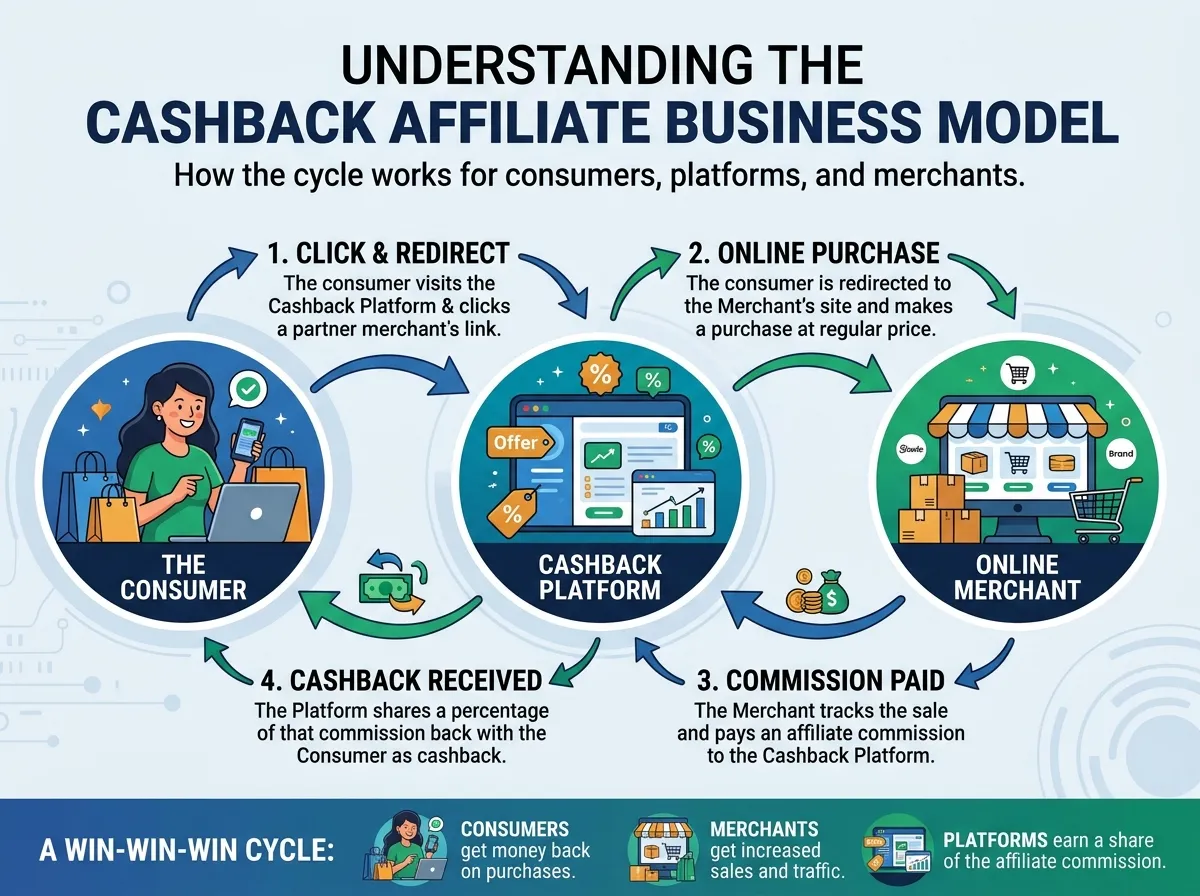
A cashback affiliate model connects three primary participants: the customer, the merchant, and the affiliate platform.
The merchant wants to attract buyers and increase sales. The affiliate platform promotes the merchant’s products or services through its website, app, email campaigns, or other marketing channels. When a customer clicks an affiliate link and completes a qualifying purchase, the merchant pays a commission to the affiliate platform.
The platform then shares a portion of that commission with the customer as cashback.
For example, imagine an online retailer offers a 12% affiliate commission on a qualifying purchase of $100. The affiliate platform earns $12 from the transaction. If it rewards the customer with $8, the remaining $4 becomes gross revenue before operating expenses.
This arrangement makes cashback different from a conventional affiliate program. Traditional affiliates often retain the entire commission, while cashback publishers use part of their earnings to encourage customer purchases and repeat engagement.
The model works best when the reward is meaningful to customers but does not consume the entire commission. A cashback platform must also account for transaction reversals, payment processing, customer support, technology costs, and other expenses before deciding how much of its commission it can distribute.
Cashback Affiliate Commission Models
The commission structure determines how much revenue a cashback platform earns and how much it can return to customers. Merchants may offer different payment arrangements depending on their product category, sales objectives, and affiliate program terms.
Percentage-Based Commission
Percentage-based commissions are among the most common structures in cashback affiliate marketing. The affiliate receives a fixed percentage of the qualifying purchase value.
For instance, a merchant might pay a 10% commission on eligible purchases. The cashback platform could share 70% of that commission with the customer and retain the remaining 30%.
The reward amount may change according to the merchant’s commission rate. A high-commission retailer can support more attractive cashback offers, while a lower-commission merchant may require a smaller reward.
This structure is particularly useful for ecommerce businesses because the commission generally increases with the transaction value.
Fixed Commission Per Sale
Some merchants pay a predetermined amount for each approved transaction rather than a percentage of the purchase.
A financial service provider, subscription company, or digital product merchant might offer a fixed commission for a qualified signup or completed purchase. The cashback platform can use a portion of this payment to reward customers.
Fixed commissions make revenue easier to estimate, although the reward must be designed carefully when customer acquisition costs or transaction values vary.
Tiered Commission Structures
Tiered commissions reward affiliates for generating higher sales volumes or reaching specific performance targets.
A merchant may offer a standard commission for a certain number of monthly sales and a higher rate after the affiliate reaches a defined threshold. This can encourage cashback platforms to improve traffic quality, promote selected products, and increase customer activity.
The platform should not automatically raise cashback rates whenever a tier is reached. It needs to consider whether the additional commission is reliable and whether the increased reward will produce enough incremental revenue to justify the expense.
How Cashback Reward Programs Encourage Customer Loyalty
Cashback reward programs can influence purchasing decisions by giving customers a direct financial benefit after they shop through an affiliate platform.
Unlike points that may require complicated redemption rules, cashback is easy for customers to understand. They know that a qualifying purchase can generate a monetary reward, even if the reward becomes available only after the merchant confirms the transaction.
A successful program makes the reward process transparent. Customers should understand which purchases qualify, how cashback is calculated, when it becomes payable, and what happens if an order is canceled or returned.
Reward timing is especially important. Many affiliate networks require a waiting period before commissions become approved. Cashback platforms typically need to follow a similar process so that they do not distribute money from transactions that are later reversed.
A clear pending and confirmed cashback system helps manage expectations. It also reduces confusion when customers see a reward in their account but cannot withdraw it immediately.
Affiliate Cashback Business Models That Support Growth
Not every cashback company operates in the same way. The right structure depends on the audience, available technology, merchant relationships, and the platform’s financial resources.
Cashback Website Model
A cashback website allows users to browse merchant offers, click tracked affiliate links, and earn rewards from eligible purchases.
The website may organize offers by product category, merchant, reward percentage, or promotional campaign. Search visibility and useful shopping information can help attract customers who are already looking for ways to save money.
For publishers exploring alternative affiliate channels, Affiliate Marketing Without a Website offers useful context on how affiliate promotions can operate beyond a conventional website. A cashback business, however, generally needs a reliable platform or customer interface to track purchases and manage reward balances.
Cashback Mobile App Model
A mobile app can make cashback more accessible by allowing customers to discover offers, track pending rewards, and receive notifications about new promotions.
Mobile platforms can also support personalized recommendations based on shopping preferences. For example, a customer who regularly purchases household products may receive relevant cashback offers from retailers in that category.
The main challenge is maintaining accurate tracking across mobile browsers, merchant apps, and different checkout environments. A smooth user experience depends on dependable affiliate attribution and clear reward reporting.
Cashback Marketplace Model
A cashback marketplace brings multiple merchants together in one shopping environment. Customers can compare offers and choose retailers based on product availability, price, and reward value.
This model can create a broader revenue opportunity because the platform is not dependent on one merchant or product category. It also allows the business to build partnerships across different industries.
For ecommerce-focused publishers, Affiliate Marketing for Ecommerce provides a relevant foundation for understanding how merchant partnerships can support online sales. Cashback marketplaces extend that relationship by sharing a portion of affiliate earnings directly with shoppers.
Cashback Revenue Sharing Models and Profit Distribution
Revenue sharing is the financial foundation of a cashback affiliate business. The platform must decide how much commission to return to customers, how much to retain, and how much to reserve for operational costs.
A simple revenue-sharing arrangement may divide an approved commission into three parts:
-
Customer cashback
-
Platform revenue
-
Operating or promotional reserve
Suppose a merchant pays $20 in affiliate commission for an approved transaction. The platform distributes $13 as cashback, retains $5 as gross platform revenue, and allocates $2 toward promotional costs or other expenses.
The exact percentages depend on the business. A new platform may offer higher rewards to attract customers, while an established company may focus on improving margins and customer retention.
The important point is that cashback revenue sharing models should be based on actual commission income rather than the advertised purchase value. If a customer spends $200, the cashback platform does not necessarily earn a percentage of the full $200. Its income depends on the merchant’s affiliate agreement.
Why Commission Transparency Matters
Cashback offers can become misleading when the displayed reward does not reflect the actual eligible commission.
A platform should avoid advertising an unusually high reward without confirming that the merchant’s commission can support it. Temporary promotional rates may be useful, but they need a clear funding source.
Transparency also protects customer trust. If cashback is calculated on eligible product prices rather than taxes, shipping, or excluded items, the platform should explain those conditions before the purchase.
Cashback Affiliate Platforms and Merchant Partnerships
Cashback affiliate platforms depend on reliable merchant partnerships and accurate tracking systems.
Affiliate networks often provide access to multiple merchants, commission information, tracking links, and transaction reports. A cashback business can use these relationships to expand its offer catalog without negotiating every partnership independently.
Direct merchant partnerships can also be valuable. A platform with a loyal customer base may negotiate exclusive cashback rates, seasonal promotions, or higher commissions for selected products.
The most effective partnership strategy is not simply to collect as many merchants as possible. It is to build a relevant offer selection that matches customer demand.
A platform focused on travel, electronics, fashion, or household shopping may perform better when its merchant selection reflects the purchasing habits of its audience.
Tracking and Attribution
Accurate tracking is essential because cashback depends on connecting a customer’s purchase with the correct affiliate referral.
Tracking systems typically record the referral source, merchant, transaction value, and commission status. The merchant or affiliate network then confirms whether the transaction meets the program’s requirements.
Problems can arise when customers switch devices, use incompatible browser settings, apply excluded coupons, or complete purchases through an untracked route.
A cashback platform should communicate that tracking is not always immediate or guaranteed. It should also provide a process for reviewing missing transactions when the merchant’s program permits it.
Cashback Referral Marketing: Turning Customers Into Advocates

Referral marketing can help cashback platforms acquire new users without relying entirely on paid advertising.
A referral program may reward an existing customer when a friend registers, completes a qualifying purchase, or reaches a specific activity milestone. The reward can be a fixed cashback bonus, a percentage-based incentive, or a temporary promotional credit.
The strongest referral programs reward meaningful activity rather than registrations alone. Paying a bonus for every account created may attract users who never shop, creating unnecessary acquisition costs.
A more sustainable arrangement connects the referral reward to a confirmed transaction or another measurable action.
For example, a platform could offer a small bonus to both the referring customer and the new user after the first eligible purchase. This creates a shared incentive while helping the business control its spending.
Referral rules should also prevent duplicate accounts, self-referrals, and fraudulent activity. Clear eligibility conditions make the program easier to manage and more trustworthy for genuine customers.
Affiliate Cashback Incentives and Customer Behavior
Cashback incentives influence how customers compare retailers and decide where to purchase.
A shopper may choose between two similar products based on price, delivery conditions, merchant reputation, and the available reward. Cashback can become an additional reason to complete a purchase through a particular affiliate platform.
However, reward size alone does not guarantee loyalty. Customers may leave if payments are delayed, tracking errors are frequent, or withdrawal requirements are difficult to understand.
A balanced incentive strategy considers the entire customer experience. Small but dependable rewards can be more valuable than large promotional offers that are difficult to redeem.
Cashback businesses can also use seasonal campaigns, category-specific bonuses, and limited-time offers to encourage shopping activity. These promotions should be measured against their actual contribution to revenue, not merely the number of clicks or purchases they generate.
Cashback Affiliate Profitability Strategies
Profitability requires more than increasing the number of affiliate transactions. A platform must understand which merchants, customers, and promotional activities generate sustainable returns.
One useful approach is to evaluate the contribution margin of each transaction. This means calculating the commission received, subtracting customer cashback, and accounting for variable expenses associated with processing and supporting the transaction.
Customer acquisition costs also deserve attention. If a platform spends $15 to acquire a customer who generates only $8 in net commission during the first month, the campaign may be unprofitable. The business needs to determine whether that customer is likely to generate additional value over time.
Repeat purchases can improve the economics of cashback affiliate businesses. A customer who returns regularly may generate more commission without requiring the same acquisition expense for every transaction.
Platforms can improve profitability by focusing on relevant merchants, reducing tracking problems, managing promotional spending, and encouraging repeat shopping.
Another opportunity comes from carefully selected financial products. Some affiliate programs offer commissions for approved applications or qualified customer actions. Businesses considering this category should review the program’s rules, disclosure requirements, and customer suitability standards.
For publishers exploring this area, Credit Card Affiliate Marketing explains a related affiliate niche in which commission structures and compliance requirements can differ significantly from ordinary retail offers. Cashback platforms should present financial products responsibly and avoid implying that rewards outweigh fees, interest, or other financial risks.
The Role of Marketing and Customer Acquisition
A cashback platform needs a consistent way to attract shoppers who are interested in saving money. Search visibility, useful content, email communication, social media, and referral campaigns can all contribute to customer acquisition.
Educational content can explain how cashback works, compare merchant reward opportunities, and answer common questions about payment timelines. This approach attracts users who are actively researching savings options rather than relying only on promotional advertisements.
For platforms targeting local merchants or regional shopping audiences, search visibility can also help introduce relevant offers to nearby customers. Businesses exploring local marketing tools may find Local SEO Marketing Software useful when developing a broader strategy for improving local search presence.
The marketing message should remain accurate. Cashback is generally a reward for qualifying purchases, not an automatic discount applied at checkout. Customers should understand this distinction before using the platform.
Challenges That Cashback Affiliate Businesses Must Manage
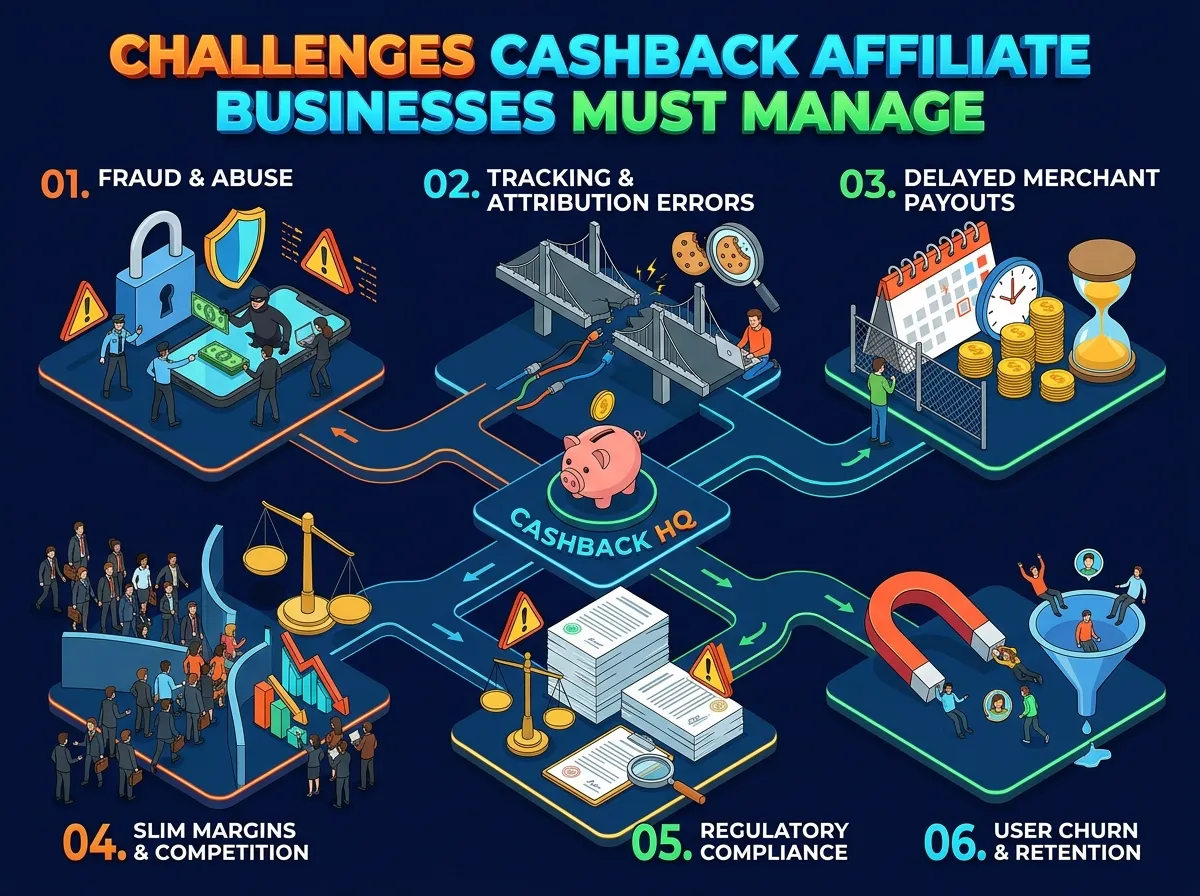
Although cashback models offer attractive opportunities, they also introduce financial and operational challenges.
Commission reversals are one of the most important concerns. A customer may receive cashback information before the merchant approves the purchase. If the order is canceled, returned, or rejected under the affiliate program’s terms, the commission may not be payable.
Cash flow can also become difficult when merchants take several weeks or months to confirm transactions. A platform that distributes rewards too early may face a shortage of available funds.
Fraud prevention is another concern. Fake accounts, duplicate referrals, manipulated transactions, and unauthorized promotional activity can reduce profitability. Businesses need reasonable verification processes without making the experience unnecessarily complicated for legitimate customers.
Finally, competition can place pressure on cashback rates. When several platforms promote the same merchant, customers may compare rewards and move toward the highest offer. Competing only through larger cashback percentages can weaken margins.
A stronger business focuses on dependable tracking, relevant merchant selection, transparent terms, helpful customer support, and a reward system that remains financially sustainable.
The Future of Cashback Affiliate Models
Cashback affiliate businesses are likely to continue evolving as shopping behavior, payment technology, and affiliate tracking systems change.
Personalized offers can help platforms present rewards that match individual shopping interests. Improved analytics may also help businesses identify which campaigns generate valuable customers rather than temporary traffic.
Partnerships between cashback platforms and ecommerce merchants may become more specialized, with exclusive offers and customer segments receiving greater attention.
At the same time, responsible data practices and clear reward disclosures will remain essential. Customers need confidence that their purchases are tracked correctly and that their financial information is handled appropriately.
Ultimately, the most successful Cashback Affiliate Models will not be defined by the highest advertised reward. They will be defined by their ability to create value for customers, generate measurable sales for merchants, and maintain a healthy revenue structure for the affiliate business.
A sustainable cashback platform turns commission sharing into a long-term relationship. When customers receive reliable savings and merchants gain meaningful sales, cashback becomes more than a promotional incentive—it becomes a practical foundation for recurring affiliate revenue.
10 Frequently Asked Questions
1. What are Cashback Affiliate Models?
Cashback Affiliate Models are business structures in which affiliate platforms earn commissions from merchants and return part of those earnings to customers as cashback rewards.
2. How does a cashback affiliate business make money?
A cashback platform earns affiliate commissions when customers complete qualifying purchases. It distributes a portion of the commission as rewards and retains the remaining amount as revenue before expenses.
3. Are cashback affiliate programs profitable?
Yes, they can be profitable when commission income exceeds cashback payments, customer acquisition costs, operating expenses, and other financial obligations.
4. What is a cashback affiliate commission model?
It is the payment structure used by merchants to compensate cashback affiliates. Common arrangements include percentage-based commissions, fixed payments, and tiered commission rates.
5. How do cashback reward programs work?
Customers shop through tracked affiliate links. After the merchant confirms an eligible purchase, the cashback platform receives a commission and credits the customer with the agreed reward.
6. What is the difference between cashback and traditional affiliate marketing?
Traditional affiliates usually retain their commission as earnings. Cashback affiliates share part of the commission with customers to encourage purchases and repeat engagement.
7. What are the main cashback affiliate platforms?
Cashback affiliate platforms are websites or applications that connect shoppers with merchant offers, track eligible purchases, and manage customer reward balances.
8. How can cashback platforms attract more customers?
They can use relevant merchant offers, referral programs, useful shopping content, search marketing, personalized promotions, and reliable reward experiences.
9. What affects cashback affiliate profitability?
Profitability depends on commission rates, cashback percentages, transaction approval rates, customer acquisition costs, repeat purchases, fraud prevention, and operating expenses.
10. Can cashback affiliate models work for small businesses?
Yes. A small business can begin with a focused merchant category, a manageable reward structure, and a reliable affiliate tracking system before expanding its partnerships.