
Affiliate Marketing vs MLM Understanding the Key Differences
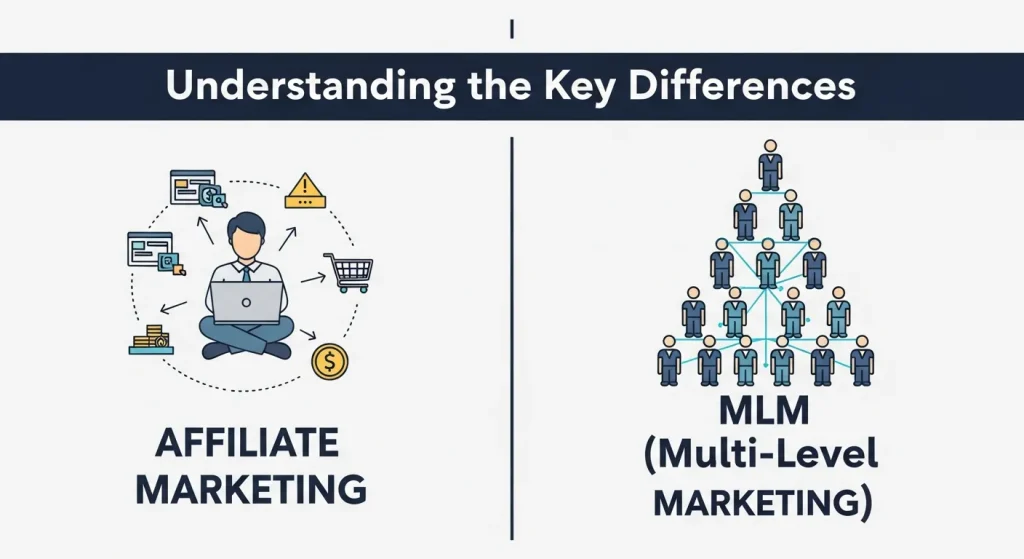
What is Multi-Level Marketing (MLM)?
MLM involves selling products directly while building a network of recruits. Earnings come from both product sales and commissions on your downline’s sales.
Key Features of MLM
- Direct Selling: Peer-to-peer marketing is critical.
- Team Recruitment: Your income is tied to your recruits’ performance.
- Dual Income Streams: Earn from sales and bonuses.
- Pre-Built Framework: Training and tools are provided.
Popular MLM Companies
| Company | Products | Highlights |
|---|---|---|
| Amway | Health & Home | Established global brand |
| Herbalife | Nutritional | Focus on wellness products |
| Mary Kay | Cosmetics | Large agent network |
Affiliate Marketing vs MLM – Key Differences
| Aspect | Affiliate Marketing | MLM |
|---|---|---|
| Product Ownership | None | Required in most cases |
| Recruitment | Not required | Core to earning |
| Income | Commission per sale | Sales + downline bonuses |
| Risk | Low | Medium to High |
| Marketing Focus | Content creation & promotion | Direct sales & team building |
| Scalability | High with automation | Limited by downline management |
Understanding Affiliate Marketing vs MLM
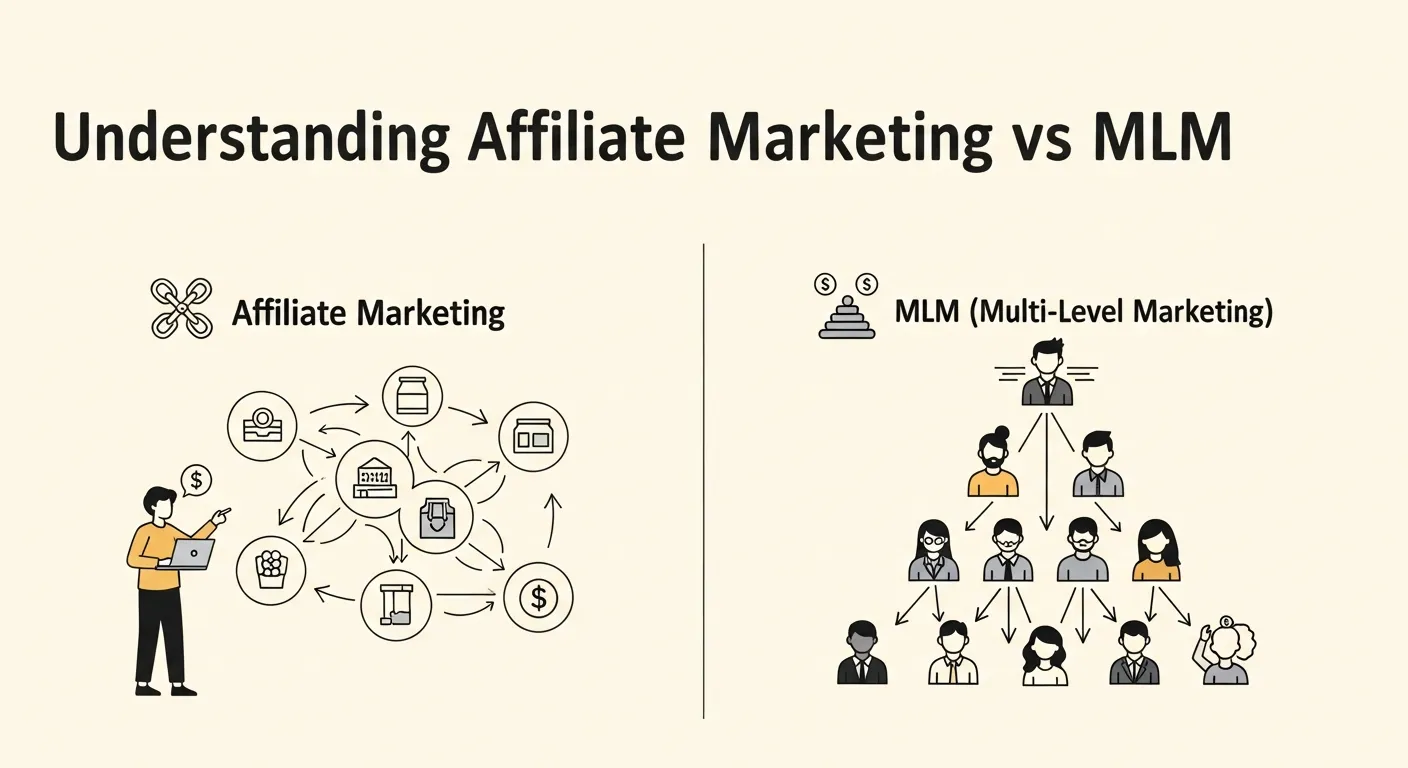
Affiliate Marketing vs MLM highlights the key differences between two popular ways to earn income online. While MLM relies heavily on recruiting a team, affiliate marketing focuses on promoting products or services through your own content, earning commissions without inventory or complex structures. Using conversational affiliate marketing strategies allows authentic engagement via blogs, email campaigns, and social media, building trust and boosting conversions. SEO affiliate marketing ensures content ranks high, while B2B affiliate marketing targets businesses and high-value clients to expand earnings. Integrating affiliate marketing with data analytics and CPA affiliate marketing optimizes clicks, conversions, and ROI. By learning how to master affiliate marketing and leveraging AI, automation, and insights, affiliates can ensure sustainable growth and prepare for the future of affiliate marketing.
Choosing the Right Model
- Affiliate Marketing: Ideal if you enjoy content creation, working independently, and building scalable passive income.
- MLM: Better suited for extroverts who thrive on networking and team management.
- Try Both: If time and effort permit, test both approaches to see which aligns with your style.
Tips for Affiliate Marketing Success
- Understand your audience’s needs.
- Create high-quality content (blogs, videos, case studies).
- Leverage SEO affiliate marketing for organic traffic.
- Use email campaigns for promotion.
- Apply conversational affiliate marketing techniques for engagement.
Overcoming Common Challenges
Affiliate Marketing Challenges:
- Saturated niches → Focus on micro-niches
- Platform dependency → Diversify programs
MLM Challenges:
- High competition → Specialize in your target market
- Recruitment pressure → Provide training and incentives
How Data & AI Can Enhance Affiliate Marketing

Affiliate Marketing vs MLM shows how leveraging data and AI can transform digital income strategies. In today’s landscape, affiliate marketing with data analytics allows tracking clicks, conversions, and audience behavior for smarter, data-driven campaigns. Incorporating AI and predictive analytics enhances CPA affiliate marketing, enabling dynamic budget allocation and optimized ROI. Conversational affiliate marketing benefits from AI-driven personalization, delivering tailored recommendations based on engagement and preferences. SEO affiliate marketing is improved through AI-generated content suggestions, while B2B affiliate marketing reaches high-value clients more effectively. Learning how to master affiliate marketing using these tools ensures sustainable growth. Platforms like HubSpot, ClickFunnels, and Google Analytics exemplify actionable insights that support the future of affiliate marketing.
Why Affiliate Marketing Is a Scalable Choice
When comparing Affiliate Marketing vs MLM, affiliate marketing stands out as a flexible and low-risk income model for individuals seeking independence and scalable revenue. It allows marketers to earn commissions by promoting products through blogs, social media, email campaigns, or video content without managing inventory or recruiting teams. Affiliate Marketing vs MLM demonstrates that combining SEO affiliate marketing, conversational affiliate marketing, and B2B affiliate marketing strategies attracts the right audience, builds trust, and generates consistent passive income. Leveraging affiliate marketing with data analytics, CPA affiliate marketing, and AI improves targeting, campaign optimization, and conversion rates. Learning how to master affiliate marketing ensures sustainable growth and prepares marketers for the future of affiliate marketing.
Why Affiliate Marketing Outperforms MLM in the Digital Era
Affiliate Marketing vs MLM highlights the advantages of digital marketing for scalable income. While MLM relies on team recruitment and direct sales, affiliate marketing allows individuals to earn commissions by promoting products through blogs, social media, email campaigns, or videos. Combining SEO, affiliate marketing, conversational affiliate marketing, and B2B affiliate marketing strategies helps attract targeted audiences, build trust, and generate passive income consistently. Leveraging affiliate marketing with data analytics, CPA affiliate marketing, and AI-driven tools improves campaign efficiency, targeting, and ROI. Learning how to master affiliate marketing ensures sustainable growth and prepares marketers for the future of affiliate marketing, offering independence, lower risk, and long-term scalability compared to traditional MLM structures.
Key Strategies to Succeed in Affiliate Marketing vs MLM
Success in Affiliate Marketing vs MLM requires applying effective strategies and modern tools. Conversational affiliate marketing helps engage audiences authentically, while SEO affiliate marketing drives organic traffic and increases visibility. B2B affiliate marketing targets businesses and high-value clients for more lucrative opportunities. Integrating affiliate marketing with data analytics and CPA affiliate marketing allows tracking of clicks, conversions, and ROI for smarter campaigns. AI-driven content personalization and predictive analytics enhance targeting, while learning how to master affiliate marketing ensures long-term sustainability. By combining these approaches, marketers can outperform MLM models, generate scalable income, and adapt to the future of affiliate marketing, leveraging automation, insights, and strategy for consistent, high-quality growth.
MLM Opportunities, Risks, and Long-Term Considerations
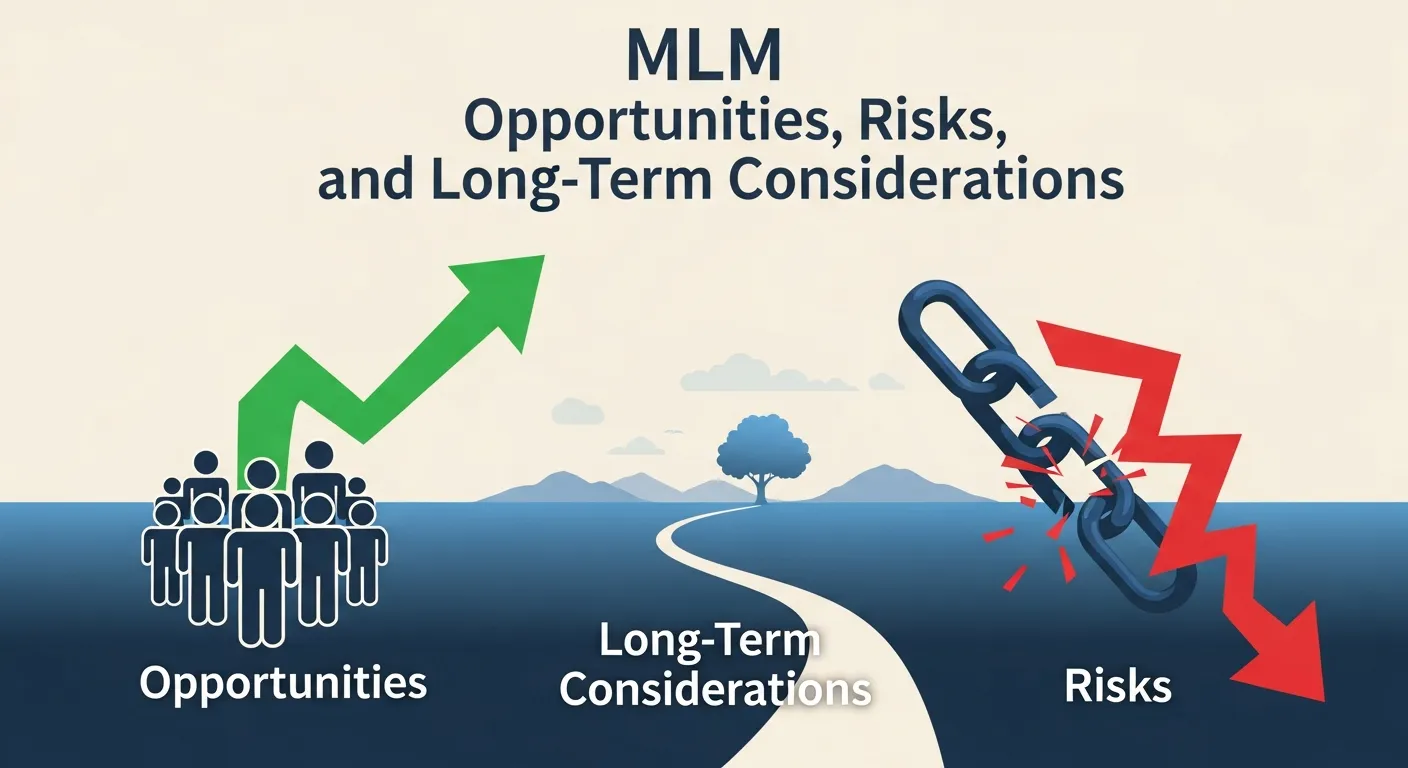
In the Affiliate Marketing vs MLM comparison, MLM appeals to individuals who enjoy personal networking, direct selling, and team-building. Earnings come from both product sales and the performance of recruited members, which can be rewarding for highly social and motivated marketers. However, Affiliate Marketing vs MLM also highlights challenges, including recruitment pressure, inventory costs, and high attrition rates. For those seeking long-term sustainability, combining trusted affiliate programs with CPA affiliate marketing methods, affiliate marketing with data analytics, and AI-driven strategies ensures a more stable, scalable income. Leveraging conversational affiliate marketing, SEO affiliate marketing, and B2B affiliate marketing techniques further strengthens growth. Learning how to master affiliate marketing prepares marketers for the future of affiliate marketing while reducing team-dependent risks.
Choosing the Right Approach
Deciding between Affiliate Marketing vs MLM depends on personal goals, audience type, and available resources. For those seeking scalable, sustainable income, affiliate marketing is often the more flexible and low-risk choice. By leveraging SEO affiliate marketing, conversational affiliate marketing, and affiliate marketing with data analytics, affiliates can optimize campaigns, engage the right audience, and drive higher conversion rates consistently. Understanding audience behavior, experimenting with content formats, and delivering consistent value are key to building a successful affiliate marketing strategy. Learning how to master affiliate marketing ensures campaigns remain effective while preparing marketers for the future of affiliate marketing, providing a competitive edge over traditional MLM models.
Ensuring Long-Term Growth
Integrating CPA affiliate marketing strategies allows marketers to track performance, monitor ROI, and allocate resources efficiently, while B2B affiliate marketing opens opportunities to target businesses, agencies, and high-value clients. Combining these approaches with AI-driven automation, predictive analytics, and affiliate marketing with data analytics enables affiliates to scale efforts, personalize recommendations, and maintain sustainable growth. By applying conversational affiliate marketing, SEO affiliate marketing, and other advanced strategies, marketers can maximize campaign efficiency and audience engagement. Learning how to master affiliate marketing equips affiliates to navigate evolving digital trends, outperform traditional MLM structures, and secure long-term income streams. These strategies ensure a future-ready approach to affiliate marketing while mitigating the risks of team-dependent revenue models.
Final Thoughts on Affiliate Marketing vs MLM
Affiliate Marketing vs MLM provides two distinct paths to online income. Affiliate marketing offers flexibility, passive income, and growth through SEO affiliate marketing, conversational affiliate marketing, B2B strategies, and affiliate marketing with data analytics. MLM relies on team recruitment and direct sales, which can be rewarding but riskier. By incorporating CPA affiliate marketing and AI-driven insights, affiliates can optimize campaigns, increase conversions, and achieve scalable, sustainable revenue. Choosing the model that aligns with your goals, audience, and work style is essential. Consistent effort, authentic engagement, and data-driven strategies help ensure success. Learning how to master affiliate marketing prepares individuals for the future of affiliate marketing and positions them for long-term growth in the digital landscape.
FAQs: Affiliate Marketing vs MLM
1. What is the difference between Affiliate Marketing and MLM?
Affiliate Marketing vs MLM differ primarily in structure: affiliate marketing focuses on promoting products online for commissions, while MLM combines product sales with team recruitment. Conversational affiliate marketing and SEO affiliate marketing can enhance affiliate efforts effectively.
2. Can beginners start with Affiliate Marketing or MLM?
Beginners can enter both, but affiliate marketing is often simpler, requiring less upfront investment. Using affiliate marketing with data analytics tools can help optimize campaigns from the start.
3. Which model offers more passive income potential?
Affiliate marketing offers scalable passive income, especially when leveraging SEO affiliate marketing, conversational affiliate marketing, and automated systems, whereas MLM relies heavily on recruiting and team performance.
4. Is Affiliate Marketing vs MLM suitable for B2B audiences?
Affiliate marketing works well for B2B audiences through targeted campaigns and content. B2B affiliate marketing strategies can help reach businesses effectively, while MLM may be more consumer-focused.
5. How do commissions work in Affiliate Marketing vs MLM?
In affiliate marketing, commissions are earned per sale or action (CPA affiliate marketing), often with predictable payouts. MLM provides commissions from both product sales and downline recruitment, making it more complex.
6. How can SEO affiliate marketing improve Affiliate Marketing results?
SEO affiliate marketing boosts organic traffic, increases visibility, and improves conversions. Combining SEO strategies with conversational affiliate marketing enhances engagement and revenue potential.
7. Can data analytics be used in Affiliate Marketing vs MLM?
Yes! Affiliate marketing with data analytics helps track clicks, conversions, and user behavior, optimizing campaigns. MLM participants can also leverage analytics for performance tracking, but affiliate marketing sees more measurable ROI.
8. What are the risks of MLM compared to Affiliate Marketing?
MLM carries risks like high attrition rates, inventory costs, and reliance on team performance. Affiliate marketing focuses on marketing skills, content, and strategy, reducing dependency on others for income.
9. How can I master Affiliate Marketing effectively?
To master affiliate marketing, combine strategies like SEO affiliate marketing, conversational affiliate marketing, CPA affiliate marketing, and affiliate marketing with data analytics. This ensures consistent growth and optimized performance.
10. What is the future of Affiliate Marketing vs MLM?
The future of affiliate marketing is heavily digital, AI-driven, and data-focused, offering sustainable growth. While MLM continues with recruitment-based models, affiliate marketing with Data Analytics and SEO is poised to dominate the online income space.