
Maximizing Affiliate Earnings with Email Marketing
This comprehensive guide explores the intersection of email affiliate marketing and passive income. We cover essential steps, including lead magnet creation, audience segmentation, and performance tracking. By following these actionable insights, you will learn how to build authority, nurture leads, and generate sustainable revenue through personalized product recommendations.
Unlock the full potential of your online business by discovering how to skyrocket your affiliate earnings with email marketing through strategic list building and trust-driven automation.
Why Email Marketing is a Game-Changer for Affiliates
While social media platforms often feel like rented land due to shifting algorithms, email marketing provides you with a permanent digital asset. When you focus on growing affiliate earnings with email marketing, you are building a direct bridge to your consumers that no third-party platform can take away.
In the realm of modern businesses, the return on investment (ROI) for email remains unparalleled. Unlike YouTube affiliate marketing or TikTok, where content can be buried within hours, an email sits in the inbox until it is addressed. This persistence, combined with the ability to use data analytics to improve affiliate sales, makes email the crown jewel of a winning digital marketing strategy.
The Core Benefits of Email for Affiliates
- Direct Access: You bypass the “noise” of social feeds.
- Personalization: You can use conversational affiliate marketing to speak directly to a user’s pain points.
- Higher Conversion Rates: Email subscribers are often your “warmest” leads, having already opted into your brand voice.
- Automation: Tools for affiliate marketing automation allow you to earn money while you sleep by setting up evergreen sequences.
Step 1: Build an Email List That Converts
You cannot generate affiliate earnings with email marketing without a solid foundation. Your list is your most valuable business resource.
Offer an Irresistible Lead Magnet
To attract subscribers, you need a “bribe” that provides immediate value. This is the first step in how affiliate marketing builds strong customer bonds.
- E-books/Guides: “The Ultimate Beginner’s Guide to Affiliate Digital Marketing.”
- Checklists: “7 Steps to How to Start Affiliate Marketing with No Money.”
- Exclusive Deals: Access to Walmart affiliate marketing discounts or Amazon promo codes.
Optimize Your Sign-Up Infrastructure
Don’t just hide a box in the footer. Use integrated marketing techniques to place sign-up forms where they matter:
- Exit-Intent Pop-ups: Catch users before they leave your affiliate marketing websites.
- In-Content Forms: Place forms after a helpful section of a blog post.
- Landing Pages: Create a dedicated page for your lead magnet to improve brand awareness.
Step 2: Choose the Right Affiliate Products
Success depends on the quality of your recommendations. Promoting the wrong item can trigger a brand crisis management situation for your personal reputation.
Focus on Relevance and Value
Ask yourself: Does this product solve a specific problem for my audience? If you are in the fitness niche, promoting Puma affiliate marketing gear makes sense; promoting high-end SaaS development services does not.
Reputable Networks to Explore
When exploring affiliate marketing networks, look for those with high reliability:
- Amazon Associates: Best for physical consumer goods.
- ShareASale: Great for a mix of niche brands.
- ClickBank Affiliate Marketing: Known for digital products with high commissions.
- Shopify Affiliate Program: Ideal for B2B and e-commerce educators.
Step 3: Craft Winning Affiliate Emails
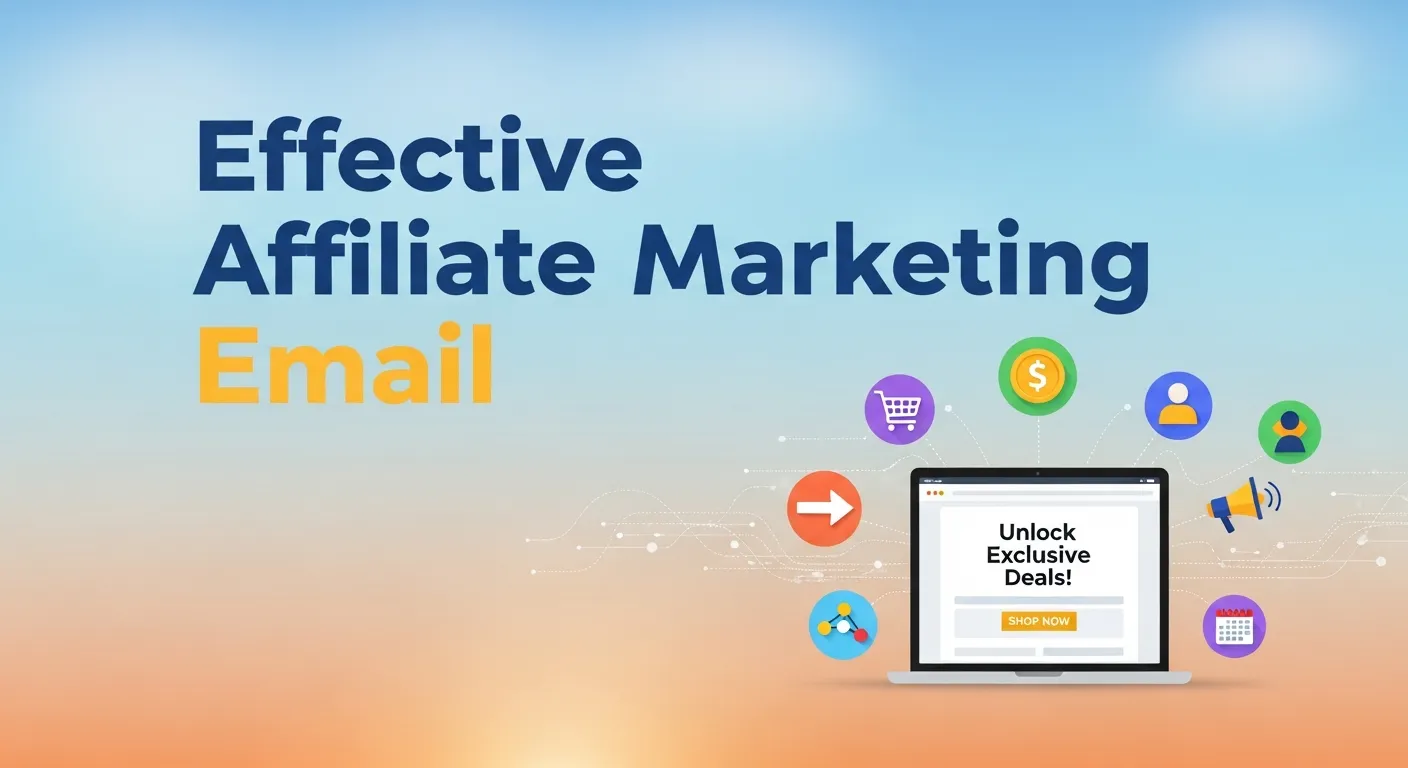
The “copy” or writing in your email is what determines your Earnings Per Click (EPC).
The Anatomy of a High-Performing Affiliate Email
A successful email follows a specific structure designed to move the reader toward a click:
- Subject Line: Must spark curiosity or promise a benefit (e.g., “The secret to how much do affiliate marketers make”).
- The Hook: A personal story or a shocking statistic that builds brand storytelling.
- The Solution: Introducing the affiliate product as the answer to the hook.
- The Call to Action (CTA): A clear, bold instruction (e.g., “Check out the best affiliate marketing apps here”).
Strategic Link Placement
Avoid “link stuffing.” Instead, use a hybrid affiliate referral marketing approach. Link once in the first third of the email, once in the middle, and once in a “P.S.” at the end. This caters to both “scanners” and “deep readers.”
Step 4: Segment Your Audience for Better Conversions
One of the biggest affiliate marketing mistakes is sending the same email to everyone. Affiliate marketing data analysis shows that segmented campaigns have significantly higher open rates.
Effective Segmentation Strategies
| Segment Type | Description | Example Affiliate Offer |
| New Subscribers | People who just joined your list. | Beginner’s guide to online affiliate marketing. |
| Active Clickers | Those who click links but haven’t bought. | A limited-time “Summer Discount” or coupon. |
| Past Buyers | People who have already purchased through you. | High-ticket affiliate marketing upsells. |
| Topic Interests | Based on which blog categories they read. | Affiliate marketing travel guide for travelers. |
Step 5: Optimize and Test for Continuous Improvement
To maximize affiliate earnings with email marketing, you must adopt a scientist’s mindset. Transforming affiliate marketing with data analytics is the only way to scale sustainably.
Key Metrics to Monitor
- Open Rate: Indicates the strength of your subject lines.
- Click-Through Rate (CTR): Measures the effectiveness of your copy and CTA.
- Conversion Rate: Shows how well the merchant’s landing page performs.
- Unsubscribe Rate: Helps you identify if you are being too “salesy.”
A/B Testing (Split Testing)
Experiment with one variable at a time. Try two different subject lines for the same email. Send Version A to 10% of your list and Version B to another 10%. The winner gets sent to the remaining 80%. This is a core part of mastering affiliate marketing management.
Step 6: Nurture Relationships and Build Trust
In digital affiliate marketing, trust is your only currency. If your subscribers feel like they are being “sold to” every day, they will leave.
The 80/20 Rule of Content
- 80% Value: Send tips, digital marketing success stories, industry news, and “how-to” guides.
- 20% Promotion: Direct affiliate offers or sales.
Transparency and Ethics
Always include an affiliate disclosure. It’s not just a legal requirement; it’s part of ethical branding. Phrases like “I may earn a commission at no extra cost to you” build brand resilience by showing you have nothing to hide.
Advanced Strategies: Scaling to the Next Level
Leveraging AI in Affiliate Marketing for Email
The future of affiliate marketing is heavily influenced by artificial intelligence. You can use AI in affiliate marketing to write subject lines, predict the best time to send emails, and even personalise the “send-from” name. By using AI-driven trend forecasting, you can stay ahead of business trends and send your audience products before they even know they need them.
High-Ticket Affiliate Marketing via Email
While selling $20 items is great for volume, high-ticket affiliate marketing is how you make significant income. Use an email “nurture sequence” to educate your audience on a complex, high-value problem. By the time you recommend a $1,000 solution, you have established enough brand authority to make the sale.
Integrating Video SEO and Email
Combine your channels for a viral marketing funnel. Send an email with a thumbnail of your latest YouTube affiliate marketing video. This boosts your video SEO while simultaneously providing your email list with high-value visual content.
Mastering Conversational Affiliate Marketing Through Email
The future of affiliate earnings with email marketing lies in shifting away from broadcast-style shouting and moving toward conversational affiliate marketing. By inviting your subscribers to reply to your emails, you break the “fourth wall” of digital advertising and build immense brand authority. This direct interaction allows you to act as a brand strategy consulting guide, offering personalized product recommendations that address specific user concerns, which can significantly boost affiliate earnings with email marketing. When you engage in one-on-one dialogue, you move the needle from simple brand awareness to deep brand loyalty. This high-touch approach is particularly effective for high-ticket affiliate marketing, where consumers require significant reassurance before making a substantial financial commitment. By fostering these bonds, you ensure your online affiliate marketing business remains resilient against shifting search algorithms, ultimately enhancing affiliate earnings with email marketing over time.
Leveraging AI in Affiliate Marketing for Email Optimization
Integrating AI in affiliate marketing has revolutionised how creators scale their email operations. From AI-driven trend forecasting that predicts which products will be in high demand to machine learning algorithms that optimise “send-time” for each individual subscriber, automation is key. You can use AI to perform affiliate marketing data analysis at a scale impossible for humans, identifying hidden patterns in click-through rates and conversion data. This allows you to refine your brand positioning strategy in real-time. By utilizing AI-driven trend marketing, you can ensure your seasonal promotions, such as “Summer Discounts” or “Holiday Promotions,” are sent to the exact segments most likely to convert, drastically increasing your overall Earnings Per Click (EPC) and maximising your long-term ROI.
Scaling with B2B Affiliate Marketing and SaaS Recurring Revenue
One of the most sustainable ways to grow affiliate earnings with email marketing is by focusing on B2B affiliate marketing. Unlike consumer goods, B2B products—such as SaaS development services, payment gateway solutions, or CRM tools—often offer recurring commissions. This means a single email conversion can lead to monthly payouts for years, providing a stable foundation for your brand architecture. By positioning your content around professional growth and efficiency, you appeal to business owners looking for digital payment solutions or app development services. Highlighting these tools within a “Best Resources” newsletter establishes you as a digital marketing expert, allowing you to build a portfolio of high-value, evergreen offers that compound over time, creating a truly passive income stream.
Navigating Seasonal Trends in Marketing via Email
Understanding the magic of seasonal markets is essential for any affiliate looking to capitalize on peak spending periods. Successful email affiliate marketing involves planning your seasonal promotions for e-commerce months in advance. By aligning your brand voice strategy with upcoming events like “EID Marketing Ideas,” “Back-to-School,” or “Winter Campaigns,” you capture the audience’s heightened intent. Use seasonal hashtag strategies across social media to drive traffic to your email sign-up forms, then deliver exclusive holiday promotions directly to their inboxes. This cross-channel seasonal marketing ensures that your brand personality in marketing remains relevant throughout the year. Mastering the timing of these emails allows you to ride the wave of consumer brand marketing trends and significantly boost your seasonal revenue.
The Role of Video SEO and YouTube Integration in Email
To truly supercharge your affiliate marketing with content, you should integrate your email list with your YouTube affiliate marketing efforts. Sending a “video-first” email—where you share a thumbnail and a link to a detailed product review—can dramatically increase your video SEO and engagement. This integrated marketing approach allows you to provide visual proof of a product’s value, which is a powerful driver of brand equity. By using YouTube affiliate marketing to demonstrate the “How-to” of a product, you lower the buyer’s friction and build a stronger brand positioning. This strategy not only increases your affiliate earnings with email marketing but also grows your social following, creating a self-sustaining ecosystem where each channel feeds the other for maximum authority and reach.
Conclusion
Boosting your affiliate earnings with email marketing is a journey of building trust and delivering consistent value. By mastering list segmentation, crafting persuasive copy, and utilizing affiliate marketing automation, you can create a reliable income stream that works around the clock. Remember, the key is to stay authentic, prioritize your audience’s needs, and never stop testing your strategies.
FAQs
1. Is affiliate marketing dead in the age of social media?
2. How much do affiliate marketers make through email?
It varies. However, many experts see a significant portion of their income—often over 50%—coming directly from their email list due to higher EPC (Earnings Per Click).
3. What is an affiliate marketing program that works well with email?
Programs with recurring commissions, like the Shopify affiliate program or various SaaS development services, are excellent for email because you can nurture the lead over time.
4. Can I start affiliate marketing with no money using email?
Yes. You can use free tiers of email service providers like Mailchimp or ConvertKit. Focus on how to become an affiliate marketer with zero cost by creating free lead magnets and sharing them on social media to boost affiliate earnings with email marketing.
5. How often should I send affiliate emails?
Consistency is key, but don’t overdo it. Sending 2-3 times a week is usually a “sweet spot” for maintaining brand awareness without annoying your subscribers.
6. What are the best affiliate marketing sites to find products?
Check out Amazon Associates for physical goods and ClickBank or CJ Affiliate for a wider variety of digital and high-ticket items.
7. Do I need a website to start email affiliate marketing?
While a website helps build brand architecture, you can technically start with just a landing page and a social media presence to drive traffic to your sign-up form.
8. Is affiliate marketing legit?
Yes. It is a performance-based marketing model used by some of the world’s largest companies, including Puma, Walmart, and GoDaddy.
9. How do I avoid being marked as spam?
Always use double opt-in, provide an easy unsubscribe link, and ensure your brand voice strategy focuses on providing value rather than just hard-selling.
10. What is high-ticket affiliate marketing?
It refers to promoting products that offer high commissions, often $500 or more per sale. This usually requires a more sophisticated brand strategy framework and an educated email audience to maximize affiliate earnings with email marketing.