
Coupon Affiliate Marketing: Turning Deals Into Affiliate Revenue

Coupon Affiliate Marketing allows publishers to earn commissions by promoting discount codes, cashback offers, and exclusive deals from partner brands. By combining relevant promotions with coupon websites, strategic partnerships, and accurate conversion tracking, affiliates can attract purchase-ready shoppers and generate consistent revenue. Successful campaigns depend on trustworthy offers, effective link management, audience relevance, and data-driven optimization.
A good deal can influence a customer’s purchasing decision more quickly than many traditional promotional messages. When shoppers discover an attractive discount, they often become more interested in completing a purchase, especially when the offer comes from a source they trust. This buying behavior has created valuable opportunities for businesses, publishers, and content creators through coupon affiliate marketing.
Coupon Affiliate Marketing is a performance-based promotional approach in which affiliates share discount codes, promotional offers, and special deals to encourage customers to purchase products or services. Affiliates earn commissions when qualifying purchases occur through their promotional activities. Unlike traditional advertising, where businesses may pay for visibility regardless of sales results, this model connects affiliate earnings with measurable customer actions.
The popularity of online shopping has made discount-focused content an important part of the buying journey. Customers regularly search for promotional codes before completing orders, compare available offers, and explore websites that collect discounts from different brands. Affiliates can use this behavior to introduce relevant products while helping shoppers discover potential savings.
However, successful coupon promotion involves more than publishing discount codes. Affiliates need to establish reliable partnerships, maintain accurate offers, understand customer behavior, and measure which promotions generate meaningful sales.
When these elements work together, coupon affiliate marketing can become a sustainable revenue channel for publishers and an effective customer acquisition strategy for brands.
Why Coupons Have Become an Important Part of Affiliate Marketing
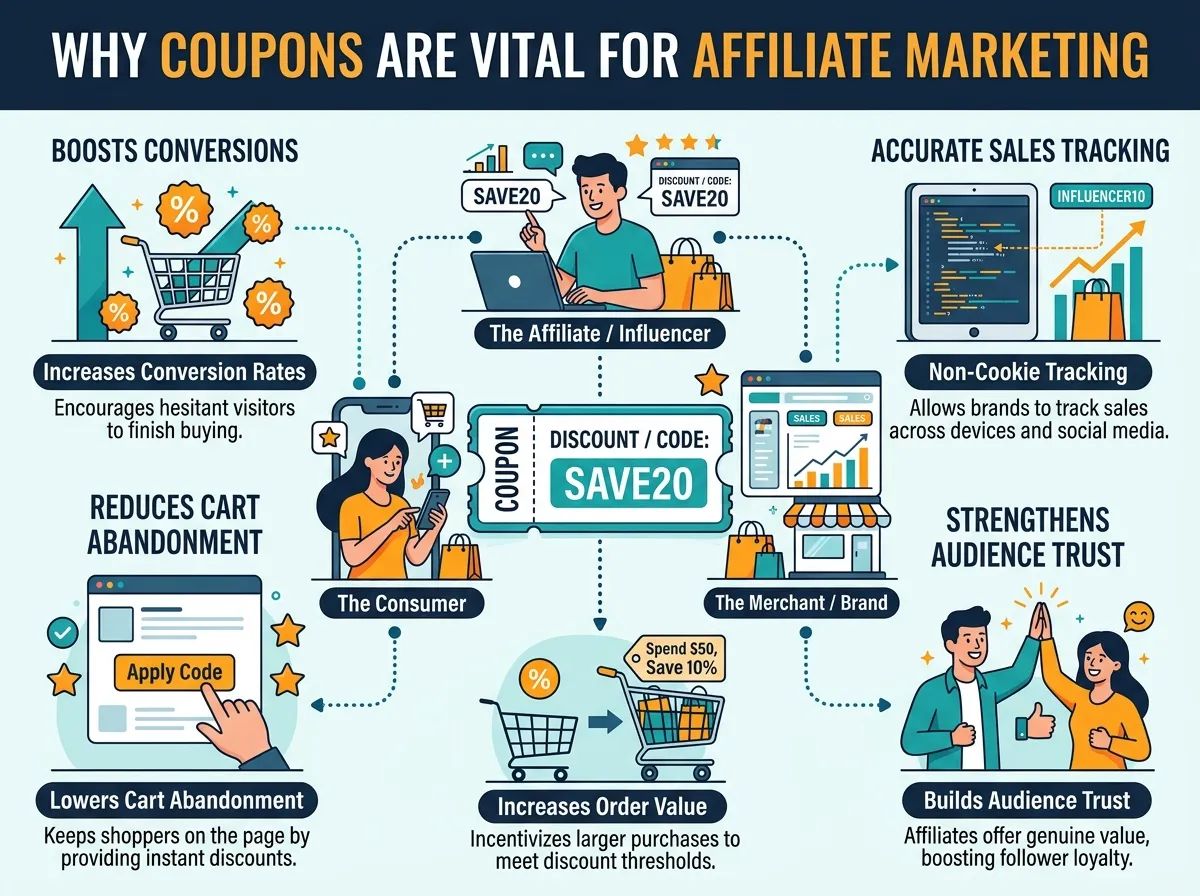
Price plays an important role in online purchasing decisions. Even customers who already intend to buy a product may search for a discount before completing their order. This creates an opportunity for affiliates to connect with shoppers at an important stage of the buying process.
Coupons provide an immediate incentive. A percentage discount, free delivery offer, or limited-time promotion can encourage customers to move from consideration to purchase.
For affiliate marketers, this creates a promotional environment where the audience already has some buying interest. Instead of introducing an unfamiliar product to someone with no immediate purchasing intention, affiliates can reach people actively searching for ways to save money.
Brands also benefit from this approach. Coupon partnerships can help increase product visibility, attract price-conscious shoppers, and encourage purchases during promotional periods.
Another reason for the growing importance of coupon marketing is its flexibility. Affiliates can promote offers through dedicated coupon websites, product reviews, email newsletters, social media platforms, and niche blogs.
This allows businesses to work with different types of publishers while reaching customers through multiple discovery channels.
However, discounts alone do not guarantee success. The quality of the offer, relevance of the audience, and credibility of the affiliate platform all influence the final results.
The Business Model Behind Coupon Affiliate Programs
Coupon affiliate programs connect merchants with publishers who promote products using tracked referral links and promotional codes.
The merchant provides approved offers, commission terms, and promotional conditions. Affiliates then distribute those offers through their websites or other marketing channels.
When a customer clicks an affiliate link or uses an eligible promotional code and completes a qualifying purchase, the affiliate may receive a commission.
For example, an online fashion retailer may offer a 15% discount through an affiliate partner. The affiliate publishes the offer on its website and includes a tracked link directing visitors to the retailer.
A shopper discovers the discount, visits the store, and completes an order. The affiliate tracking system records the eligible transaction and attributes the commission according to the program’s rules.
Different merchants offer different commission structures. Some provide a percentage of the order value, while others use fixed payments or product-specific rates.
Cookie duration, attribution rules, excluded products, and promotional restrictions can also influence affiliate earnings.
Affiliates should examine these conditions before promoting an offer. A high commission rate may look attractive, but it is less valuable when the program has limited tracking periods, strict restrictions, or low conversion potential.
The strongest partnerships are built around a combination of relevant products, attractive offers, transparent terms, and reliable tracking.
How Affiliate Coupon Websites Influence Purchasing Decisions
Affiliate coupon websites have developed into useful destinations for shoppers looking for savings across different product categories.
These platforms typically organize promotional offers by retailer, product type, brand, or shopping category. Visitors can explore available discounts and select offers that match their purchasing needs.
Their value comes from convenience. Instead of visiting multiple retailer websites individually, shoppers can find several promotional opportunities in one place.
For affiliate publishers, this creates an opportunity to attract visitors with strong purchase intent.
However, maintaining a useful coupon website requires more than collecting promotional codes. Expired discounts, misleading claims, and duplicate offers can quickly damage visitor confidence.
A reliable platform should prioritize accurate information and make promotional conditions easy to understand.
For example, an offer may apply only to first-time customers, selected products, or orders above a particular value. Communicating these conditions helps visitors avoid disappointment during checkout.
Content quality also matters. Rather than publishing hundreds of disconnected codes, publishers can organize offers into useful shopping categories and provide context about the products or brands being promoted.
This makes the website more valuable to visitors and creates opportunities for organic search traffic.
Discount Code Marketing and the Psychology of Online Shopping
Discount code marketing works because it connects financial incentives with customer motivation.
Shoppers often compare prices before making purchasing decisions. When they discover a discount, the perceived value of the product may increase, making the purchase feel more attractive.
Different types of offers influence buying behavior in different ways.
Percentage discounts are easy to understand and can be particularly appealing for higher-priced products. Fixed-value discounts provide a clear saving amount, while free shipping can reduce the additional costs associated with online orders.
Limited-time promotions may encourage customers to complete purchases sooner, although promotional deadlines should always be genuine.
Another important factor is customer confidence. A discount shared by a trusted publisher may feel more credible than an unfamiliar advertisement. This is why affiliates should focus on building relationships with their audiences rather than publishing promotional messages without context.
Product recommendations, comparisons, and honest descriptions can help shoppers understand whether an offer is actually suitable for them.
Discount code marketing becomes more effective when the promotion supports a real customer need instead of relying entirely on urgency or exaggerated savings claims.
Developing a Promo Code Affiliate Strategy That Attracts Buyers
A successful promo code affiliate strategy begins with understanding the audience.
Not every discount appeals to every shopper. Someone searching for affordable home appliances may have little interest in fashion promotions, while a technology enthusiast may actively look for software deals and electronics discounts.
Affiliates should therefore select promotional categories that match their website’s subject matter and visitor interests.
For example, a technology-focused publisher could collaborate with software providers, computer accessory brands, and online electronics retailers. A lifestyle website might focus on fashion, home products, beauty, or travel-related offers.
Relevance improves the likelihood that visitors will interact with the promotion.
The presentation of an offer also influences its effectiveness. Customers should be able to understand the discount, applicable conditions, and purchasing destination without unnecessary confusion.
Content surrounding the offer can provide additional value. Product comparisons, buying advice, and explanations of important features help visitors make informed decisions.
Another important consideration is promotional timing. Seasonal shopping periods, product launches, holiday campaigns, and special retail events may create opportunities for increased engagement.
However, affiliates should avoid depending entirely on short-term promotional spikes. Maintaining useful evergreen deal pages can support traffic throughout the year.
A balanced approach combines relevant offers, informative content, and regular promotional updates.
The Role of Cashback Affiliate Marketing in Customer Retention
Cashback affiliate marketing adds another incentive to the traditional coupon model.
Instead of receiving only an immediate discount, customers may receive a portion of their purchase value back after completing an eligible transaction.
This arrangement can appeal to shoppers who regularly compare savings opportunities before buying products online.
For affiliates, cashback promotions can create repeat engagement because customers may return to the same platform whenever they plan another purchase.
For example, a cashback website may partner with several online retailers. Visitors browse participating stores, activate an offer, and complete qualifying purchases through tracked referral links.
The platform receives affiliate commissions and shares a portion of the earnings with eligible shoppers.
The remaining amount, if any, contributes to the platform’s revenue.
Although cashback can support customer loyalty, it requires careful financial management. Affiliates must understand commission rates, payment schedules, refund conditions, and cashback eligibility before promising specific rewards.
Transparency is especially important because customers may become dissatisfied if cashback payments are delayed or purchases fail to qualify.
Clear explanations and reliable transaction updates help maintain customer trust.
Building Strong Coupon Code Partnerships With Brands

Long-term partnerships can make coupon affiliate marketing more reliable than constantly searching for temporary promotional opportunities.
Brands often work with affiliates because they provide access to audiences that may not be reached through traditional advertising channels.
However, successful partnerships require mutual value.
Affiliates need attractive offers, reliable tracking, and fair commission arrangements. Brands want qualified customers, meaningful sales, and responsible representation of their products.
The relationship becomes stronger when both parties understand their expectations.
Publishers should consider whether a brand fits their audience, whether its products have positive market relevance, and whether the available discounts provide genuine value.
They should also examine the promotional restrictions. Some brands prohibit coupon distribution through certain channels, restrict bidding on branded search terms, or limit the use of exclusive codes.
Ignoring these conditions can lead to rejected commissions or partnership termination.
Communication also matters. Affiliates can share performance insights, discuss upcoming promotions, and request exclusive offers when their audience demonstrates strong interest.
Brands may respond by providing unique discount codes, higher commission rates, or early access to selected campaigns.
These arrangements can help affiliates differentiate their content from competing coupon websites.
Coupon-Based Affiliate Sales: From Website Visits to Purchases
Generating traffic is only one part of affiliate success. The more important question is whether visitors actually complete purchases.
Coupon-based affiliate sales depend on the relationship between promotional relevance, customer confidence, and the purchasing experience.
Imagine a visitor searching for a discount on a particular software subscription. They arrive at an affiliate website and discover an offer that clearly explains the available savings.
The website provides a brief product description, relevant conditions, and a link to the merchant.
The visitor clicks through, reviews the product, and completes the purchase.
Each stage influences the final conversion.
If the discount is expired, the landing page is confusing, or the offer does not match the customer’s expectations, the purchase may not happen.
This is why affiliates should treat promotional content as part of the overall customer journey.
A useful approach is to combine discount information with product-focused content. For instance, a publisher promoting a laptop discount could also explain the device’s specifications, intended use, and important purchasing considerations.
This creates a more informative experience than simply displaying a discount code.
Understanding how visitors move from initial interest to completed purchases is equally valuable. The concept of Inbound Conversion Paths provides useful insight into the different interactions that help turn website visitors into customers.
For coupon publishers, understanding these interactions can reveal where visitors lose interest and which content elements encourage them to continue.
Improving Affiliate Deal Promotion Across Multiple Channels
Coupon promotions can reach potential customers through more than dedicated deal websites.
Publishers increasingly use different content channels to distribute offers and connect with shoppers throughout their purchasing journeys.
Search engine optimization remains important because many consumers search for specific brand discounts, product offers, and promotional codes. Well-organized coupon pages can attract this traffic when they provide accurate and useful information.
Email newsletters offer another opportunity. Affiliates can send relevant promotional updates to subscribers who have expressed interest in particular product categories.
Social media platforms can help publishers highlight seasonal discounts, limited promotions, and selected product recommendations.
Podcasts also offer promotional opportunities. A creator discussing a product or service can introduce a relevant affiliate discount code to listeners.
This approach can be particularly useful when the creator has built a loyal audience around a specific subject.
Publishers interested in this format can explore Podcast Affiliate Marketing, which explains how podcast creators can generate revenue through affiliate partnerships.
Each channel should have a clear purpose. Search traffic may attract shoppers actively looking for discounts, while social media and podcasts can introduce products to audiences earlier in the purchasing process.
Using multiple channels allows affiliates to diversify their traffic sources and reduce dependence on a single promotional platform.
Why Affiliate Link Management and Tracking Matter
Affiliate links play an important role in connecting promotional activity with measurable sales.
When customers click a tracked link, the affiliate program uses its attribution system to determine whether a qualifying transaction should be credited to the publisher.
However, managing large numbers of affiliate links can become complicated.
Publishers may work with different merchants, promotional campaigns, product categories, and tracking parameters. Without an organized system, outdated links and tracking errors can affect campaign performance.
Link management tools can help publishers organize their referral URLs and maintain consistent promotional structures.
Some affiliates also use link cloaking to create cleaner, more manageable URLs. When implemented transparently and in accordance with program policies, this can improve link organization and user experience.
For a deeper understanding of this process, Affiliate Link Cloaking explores how affiliate URLs can be managed and optimized.
It is important to remember that link cloaking should never be used to conceal misleading destinations or bypass affiliate program restrictions. Affiliate relationships should remain properly disclosed.
Accurate tracking is equally essential. Publishers need to understand how clicks, conversions, cancellations, and approved transactions are recorded.
Reliable tracking provides the information needed to evaluate promotional performance and identify opportunities for improvement.
Using Coupon Conversion Tracking to Understand Performance
Coupon conversion tracking helps affiliates understand whether their promotional activities generate meaningful results.
A website may receive thousands of visitors, but traffic volume alone does not indicate whether its coupon strategy is successful.
Conversion data provides a clearer picture.
Affiliates can examine how many visitors click promotional links, how many complete purchases, and which offers generate the highest commission value.
For example, a coupon publisher may discover that a smaller number of visitors interested in software discounts produces more revenue than a much larger audience browsing general retail offers.
This information can influence future content decisions.
Important performance measurements include:
-
Click-through rate: The percentage of visitors who click an affiliate promotion.
-
Conversion rate: The percentage of tracked visitors who complete qualifying purchases.
-
Earnings per click: The average affiliate earnings generated by each click.
-
Average order value: The average value of completed customer orders.
-
Commission per transaction: The affiliate earnings generated from an approved purchase.
-
Refund and cancellation rate: The proportion of transactions that do not remain eligible for commissions.
These measurements become more useful when analyzed together.
A high click-through rate with a low conversion rate may indicate that the promotional message attracts attention but does not match customer expectations.
A lower click-through rate combined with strong conversions may suggest that the offer reaches a smaller but more purchase-ready audience.
Publishers can explore Affiliate Marketing Data Analysis to understand how performance information can support better affiliate marketing decisions.
By reviewing these patterns regularly, affiliates can improve promotional relevance, prioritize profitable partnerships, and reduce spending on ineffective campaigns.
Common Mistakes That Can Weaken Coupon Affiliate Marketing
Even attractive discounts may fail to generate consistent results when the promotional strategy is poorly managed.
One common mistake is publishing expired coupon codes. Visitors who repeatedly encounter invalid offers may stop trusting the website. Regular verification is therefore essential.
Another problem is promoting too many unrelated products. A website that publishes discounts without considering audience interests may struggle to establish a clear identity.
Misleading savings claims can also damage credibility. Affiliates should avoid advertising discounts that do not reflect the merchant’s actual terms.
Some publishers focus heavily on commissions while overlooking customer experience. Although commission rates influence affiliate earnings, promoting unsuitable products simply because they offer higher payouts can weaken long-term performance.
Poor tracking practices create another challenge. Incorrect referral links, missing campaign parameters, and unclear attribution rules can make it difficult to understand where sales originate.
Finally, relying on one traffic source creates unnecessary risk. Search algorithm changes, social media platform updates, or declining email engagement can affect promotional reach.
A stronger coupon affiliate business focuses on accurate information, relevant partnerships, transparent promotions, and diversified audience development.
The Future of Coupon Affiliate Marketing

Coupon affiliate marketing is likely to become more data-driven as shopping platforms and affiliate technologies continue to evolve.
Personalization is one important development. Publishers can use customer interests and browsing behavior to present more relevant promotional offers rather than displaying the same discounts to every visitor.
Artificial intelligence may also help identify promotional trends, organize large collections of offers, and analyze which product categories generate stronger engagement.
At the same time, brands are placing greater importance on understanding where affiliate sales originate and whether promotional partners contribute genuine customer value.
This may encourage stronger relationships between merchants and publishers, with more emphasis on exclusive deals, transparent attribution, and reliable performance reporting.
Another important development is the growing role of mobile shopping. Customers increasingly discover and redeem promotional offers through mobile devices, making fast-loading websites and simple coupon experiences essential.
Affiliates that combine useful content, trustworthy promotions, and effective tracking will be better positioned to adapt to these changes.
The long-term opportunity is not simply to distribute more discount codes. It is to become a reliable resource that helps customers make better purchasing decisions while creating measurable value for merchant partners.
Conclusion
Coupon Affiliate Marketing creates opportunities for publishers to earn commissions by connecting shoppers with relevant discounts and promotional offers. Through coupon affiliate programs, cashback partnerships, discount code marketing, and targeted deal promotion, affiliates can reach customers who are actively looking for purchasing incentives.
However, sustainable results depend on more than attractive offers. Publishers need to maintain accurate coupon information, develop relevant brand partnerships, understand conversion behavior, and manage affiliate tracking effectively.
By combining useful content with reliable promotions and data-driven decisions, businesses can build stronger affiliate relationships and improve the overall shopping experience.
Ultimately, the most successful coupon affiliates are not simply those that publish the largest number of discounts. They are the publishers that consistently help customers discover offers worth using.
Frequently Asked Questions (FAQs)
1. What is Coupon Affiliate Marketing?
Coupon Affiliate Marketing is a performance-based strategy where affiliates promote discount codes and special offers from brands and earn commissions when customers complete qualifying purchases.
2. How do coupon affiliate programs work?
Merchants provide affiliates with promotional offers and tracked referral links. Affiliates distribute these offers, and qualifying purchases generate commissions according to the program’s terms.
3. Are coupon affiliate websites profitable?
Yes, coupon affiliate websites can generate revenue through merchant commissions. Profitability depends on website traffic, offer relevance, conversion rates, commission structures, and operating costs.
4. What is discount code marketing?
Discount code marketing involves promoting special codes that provide customers with savings, such as percentage discounts, fixed-price reductions, or free shipping.
5. How does cashback affiliate marketing work?
Cashback affiliate platforms share part of their earned affiliate commission with customers after qualifying purchases, while retaining the remaining amount as revenue.
6. How can affiliates find coupon code partnerships?
Affiliates can find partnerships through affiliate networks, individual merchant programs, brand partnership opportunities, and direct communication with businesses.
7. What makes a promo code affiliate strategy successful?
A successful strategy combines relevant offers, accurate promotional information, audience-focused content, reliable affiliate links, and consistent performance analysis.
8. How do affiliates track coupon conversions?
Affiliates use tracking links, promotional codes, and affiliate platform reporting systems to monitor clicks, purchases, approved transactions, and commission earnings.
9. Why are expired coupon codes harmful to affiliate websites?
Expired codes create a frustrating shopping experience, reduce customer confidence, and may decrease repeat visits and conversions.
10. Can social media help grow coupon affiliate marketing?
Yes. Social media allows affiliates to share promotional offers, highlight seasonal deals, introduce products, and direct interested audiences to relevant merchant websites.