
Affiliate Link Cloaking: Managing and Optimizing Affiliate URLs for Better Performance

Affiliate Link Cloaking is a link management technique that transforms long, complicated affiliate URLs into shorter, cleaner, and more recognizable links. It helps affiliate marketers organize promotional URLs, maintain consistent branding, monitor link performance, and improve the overall presentation of affiliate content. With appropriate redirect management and tracking tools, businesses can manage affiliate destinations more efficiently across websites, social media platforms, emails, and other marketing channels. When implemented transparently and in accordance with affiliate program requirements, link cloaking can support better campaign organization, user experience, and marketing performance.
Affiliate marketing depends heavily on the ability to direct potential customers toward products and services through trackable promotional links. When someone clicks an affiliate URL and completes a qualifying purchase, the affiliate marketer may receive a commission according to the program’s terms. Although this process sounds straightforward, managing affiliate links across multiple campaigns can become complicated.
Many affiliate URLs contain lengthy tracking parameters, product identifiers, campaign codes, and referral information. These addresses can appear unattractive within blog posts, social media captions, newsletters, and other promotional materials. They may also become difficult to organize when marketers work with several affiliate programs and promote products across different channels.
Affiliate Link Cloaking offers a practical way to address these challenges. It replaces complicated affiliate URLs with cleaner links that are easier to recognize, organize, and manage. For example, a lengthy affiliate destination might be represented through a branded website address such as example.com/recommended-product.
The original destination remains connected to the shortened or customized URL through a redirect. When a visitor clicks the link, the redirect sends them to the intended merchant or product page while preserving the appropriate tracking information when configured correctly.
Beyond appearance, affiliate link cloaking can support centralized link management, performance monitoring, and campaign organization. However, it should not be confused with hiding affiliate relationships from visitors or misleading users about where a link leads. Transparency, accurate disclosures, and compliance with affiliate program policies remain essential.
Why Affiliate Links Need Better Management

Affiliate marketers often work with numerous products, merchants, and promotional campaigns simultaneously. Each program may provide different tracking formats, commission structures, and destination URLs. Managing these links manually can create unnecessary complications.
A blogger promoting several software products, for example, might need to include affiliate links in product reviews, comparison articles, tutorials, and email newsletters. If a merchant changes a product page or modifies its affiliate tracking system, updating every individual link can become time-consuming.
Affiliate Link Management simplifies this process by creating a centralized structure for storing, organizing, and maintaining promotional URLs.
Instead of repeatedly copying lengthy merchant links, marketers can use a manageable collection of customized URLs connected to their affiliate destinations. When a destination changes, they can update the redirect configuration without necessarily editing every published article or promotional message.
This becomes especially valuable for websites with extensive content libraries. A single affiliate product might appear in several articles, resource pages, and promotional campaigns. Centralized management reduces the effort required to maintain consistency across these locations.
It also gives marketers greater control over how promotional links are named, categorized, and monitored. Rather than treating affiliate URLs as isolated elements, they become organized assets within a broader marketing system.
Understanding How Affiliate Link Cloaking Works
Affiliate Link Cloaking generally involves creating a redirect from a cleaner URL to the original affiliate destination.
The process begins when an affiliate marketer receives a tracking URL from a merchant or affiliate network. This URL contains information that helps identify the affiliate responsible for generating a click or conversion.
The marketer then creates a customized link through a website plugin, redirect management system, or dedicated link management platform. The new URL is connected to the original destination using an appropriate redirect.
When a visitor selects the customized link, the system processes the request and forwards the visitor to the merchant’s website.
For example, a website might use a branded path such as example.com/go/product-name instead of displaying a lengthy affiliate address containing multiple tracking parameters.
The important detail is that the redirect must preserve the information required for affiliate attribution. If tracking parameters are removed or altered incorrectly, the affiliate platform may fail to recognize the referral.
Different redirect methods can also have different implications. A temporary redirect, permanent redirect, or other forwarding configuration may be appropriate depending on the purpose and technical requirements of the link.
Marketers should therefore understand how their chosen tools handle redirects, tracking parameters, and destination changes before applying cloaking across an entire website.
Affiliate URL Masking and the Importance of Transparency
Affiliate URL Masking refers to presenting a customized or branded URL instead of displaying the original affiliate address. It can make promotional links look more consistent with a website’s identity and reduce the visual complexity of long tracking URLs.
For example, a technology blog might use a recognizable URL structure when linking to software recommendations. A lifestyle website could organize its affiliate destinations under relevant product categories.
This improves presentation, but masking should never be used to deceive visitors.
Users should be able to understand that clicking a link may take them to an external merchant or promotional destination. Affiliate relationships should also be disclosed clearly wherever required by applicable regulations, platform policies, and affiliate program agreements.
A clean URL does not replace an affiliate disclosure. Similarly, using a branded domain does not justify concealing the commercial nature of a recommendation.
Transparent communication helps establish trust between publishers and readers. When visitors understand that a website may earn commissions from qualifying purchases, they can make more informed decisions about the recommendations they follow.
The Role of Link Cloaking Tools in Affiliate Marketing
Link Cloaking Tools make it easier to create, organize, and monitor customized affiliate URLs. Depending on the platform, these tools may provide redirect management, click reporting, link categorization, campaign tagging, and automatic link replacement.
Some tools operate through website plugins, while others function as independent cloud-based services. The most suitable option depends on the size of an affiliate operation and the level of control required.
For example, a content website with several hundred affiliate links may benefit from a centralized management system that allows editors to update destinations from one dashboard. A smaller publisher might only require basic branded links and straightforward click reporting.
More advanced platforms can also provide geographic routing, device-based redirects, campaign tracking, and link testing. However, these features should be evaluated carefully because not every affiliate program permits every type of redirect or destination behavior.
Security is another important consideration. Link management systems should offer reliable access controls, regular maintenance, and appropriate protection against unauthorized changes.
The objective is not to use the most complicated tool available. It is to select a solution that makes affiliate operations more manageable without introducing unnecessary technical problems.
Shortened Affiliate Links and Branded Affiliate URLs
Shortened Affiliate Links are particularly useful when promotional space is limited. Long URLs can make social media captions, messaging content, and promotional descriptions appear cluttered. A shorter alternative creates a cleaner presentation and is easier to include in different marketing formats.
Branded Affiliate Links take this concept further by incorporating a recognizable domain or custom URL structure.
For example, a publisher might use a domain-based link that reflects the website’s name or a specific content category. This helps maintain consistency across promotional materials and makes links easier to identify.
Custom Affiliate URLs also provide organizational advantages. Instead of using automatically generated codes, marketers can assign descriptive names to links based on the product, campaign, or destination.
A URL such as example.com/go/email-software is easier for a website administrator to understand than an automatically generated string of random characters.
However, shortened links should still lead to relevant destinations. A visitor clicking a link about a particular product should not unexpectedly arrive at an unrelated page or a confusing series of redirects.
The quality of the destination experience matters just as much as the appearance of the link itself.
Affiliate Link Tracking: Understanding What Happens After a Click
Creating attractive affiliate URLs is only one part of successful link management. Marketers also need to understand how visitors interact with those links.
Affiliate Link Tracking provides information about clicks and, depending on the tracking setup, the performance of individual promotional campaigns.
For example, a publisher might promote the same product through a blog article, a newsletter, and a social media campaign. Using separate tracking identifiers or campaign parameters can help distinguish the traffic generated by each source.
This information helps marketers identify which placements attract attention and which campaigns generate meaningful results.
Common measurements include:
- Total link clicks.
- Unique visitors, where reliably measured.
- Click-through rates.
- Campaign-level performance.
- Referral sources.
- Conversions and commissions reported by the affiliate network.
It is important to distinguish between link clicks and completed purchases. A link management platform may record that someone clicked a promotional URL, but it does not necessarily know whether the visitor purchased the product.
Conversion and commission information usually comes from the affiliate network or merchant reporting system.
Combining these data sources creates a more useful performance picture. Marketers can identify links that receive attention but generate few conversions, as well as promotional placements that consistently contribute to affiliate revenue.
Link Redirect Management and Maintaining Reliable Destinations

Affiliate campaigns can remain active for months or even years. During that time, merchants may change product pages, discontinue products, update tracking systems, or modify their affiliate program requirements.
Without proper maintenance, previously published affiliate links may lead to unavailable pages or incorrect destinations.
Link Redirect Management helps prevent these problems by providing a centralized way to control where customized URLs send visitors.
Suppose a website has several articles recommending a particular software product. If the merchant changes the destination page, the publisher may be able to update the associated redirect rather than manually editing every article.
This saves time and helps preserve the consistency of older content.
Redirect management also supports link testing. Marketers can periodically verify that destinations are accessible, affiliate tracking parameters remain intact, and visitors reach the expected pages.
However, excessive redirect chains should be avoided. Sending users through several unnecessary forwarding steps can create delays, increase technical complexity, and introduce opportunities for tracking failures.
A direct and properly configured redirect is generally preferable.
Affiliate URL Protection Without Misleading Visitors
Affiliate URL Protection is another reason marketers consider link management solutions. Custom URLs can help prevent accidental exposure of complicated tracking information and make promotional links easier to maintain.
Some systems also offer access controls, link monitoring, and protection against unauthorized changes.
However, no cloaking method guarantees that an affiliate destination or tracking structure will remain completely hidden. Technical users, browsers, network tools, and security systems may reveal redirect information.
Protection should therefore focus on maintaining reliable links, controlling administrative access, and reducing opportunities for accidental modification rather than promising complete secrecy.
Affiliate marketers should also avoid using cloaking to bypass merchant restrictions, conceal prohibited traffic sources, or disguise destinations in ways that violate advertising platform policies.
For example, some affiliate programs restrict certain redirect methods, domain configurations, or promotional practices. A publisher should review the relevant terms before implementing a new link management system.
Responsible URL management protects both the visitor experience and the long-term relationship between affiliates and merchants.
Affiliate Link Optimization Across Different Marketing Channels
Affiliate Link Optimization involves improving how promotional URLs are structured, presented, organized, and measured.
The ideal link format may vary depending on the marketing channel.
On a content website, descriptive links can fit naturally within product reviews, comparison articles, and educational resources. Readers should understand what they are clicking without needing to interpret complicated tracking information.
On social media, short branded links can create a cleaner appearance within captions and promotional posts. Publishers should also follow the platform’s rules regarding affiliate promotions and disclosures.
Email marketing requires particular attention to link reliability and deliverability. Excessive redirects, unfamiliar domains, and poorly maintained URLs can create unnecessary friction for recipients and automated security systems.
Video and audio content introduce different challenges because audiences may need to remember or manually enter a URL. A short, descriptive branded link can make this process more convenient.
For instance, affiliate creators using Live Stream Affiliate Marketing can benefit from maintaining recognizable promotional links that viewers can access while watching product demonstrations or live shopping discussions.
Similarly, Podcast Affiliate Marketing demonstrates why easy-to-remember affiliate URLs can be useful when hosts share product recommendations during audio content.
The same principle applies to social platforms. Publishers involved in Facebook Affiliate Marketing can use consistent link structures to organize promotional destinations across posts and other permitted promotional formats.
Regardless of the channel, links should remain relevant, functional, and clearly associated with the products being promoted.
How Link Cloaking Supports Large Affiliate Programs
Affiliate link management becomes more complicated as a business expands its publisher relationships, product catalog, and promotional channels.
An affiliate program might involve hundreds of partners who create content across blogs, social networks, newsletters, podcasts, and other platforms. Maintaining consistent links and monitoring promotional activity across these publishers requires an organized approach.
This is where link management becomes connected with broader affiliate operations.
Program managers need to understand which products are being promoted, whether publishers are using approved destinations, and how promotional activity contributes to overall performance.
Centralized link structures can make it easier to maintain approved destinations and communicate changes to participating publishers.
However, link cloaking is only one component of a successful affiliate operation. Recruitment, commission structures, publisher communication, compliance monitoring, and performance evaluation remain equally important.
Businesses looking to develop more organized affiliate operations can explore Affiliate Program Management, which examines how companies coordinate publishers, improve program performance, and support long-term affiliate relationships.
When link management is integrated into a broader operational strategy, businesses can maintain more consistent promotional experiences as their programs grow.
Common Problems Associated With Affiliate Link Cloaking
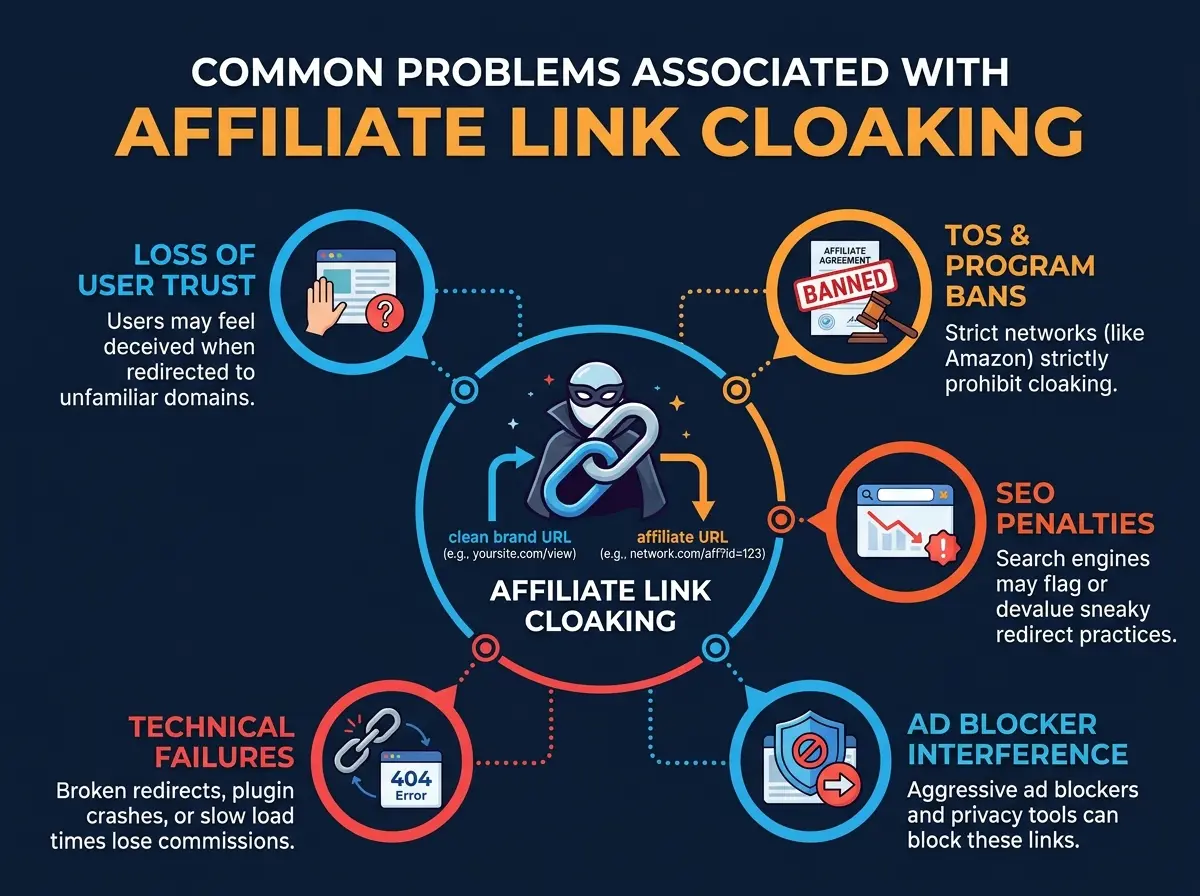
Although cloaking can simplify link management, incorrect implementation may create problems for both publishers and visitors.
One common issue is broken affiliate attribution. This can happen when a redirect removes important tracking parameters or sends users through a forwarding process that the merchant does not support.
Another problem involves outdated destinations. If an affiliate link points to a discontinued product or unavailable page, visitors may lose confidence in the recommendation.
Slow redirect performance can also affect user experience. Unnecessary forwarding steps may increase loading time, particularly when visitors are accessing links through mobile networks.
Search engine considerations deserve attention as well. Publishers should use appropriate link attributes, such as rel="sponsored" for paid affiliate relationships, where applicable. They should also avoid using cloaking to present search engines and visitors with misleadingly different destinations.
Finally, a lack of clear affiliate disclosures can damage reader trust and create compliance risks.
These problems demonstrate why affiliate link cloaking should be treated as a technical management process rather than simply a way to make URLs look shorter.
The Future of Affiliate Link Management
Affiliate marketing continues to evolve as publishers adopt new content formats, automation systems, and performance measurement technologies.
Link management tools are also becoming more sophisticated. Advanced systems can provide centralized reporting, automated destination updates, campaign segmentation, and more detailed click analysis.
Artificial intelligence may further support affiliate operations by identifying unusual click patterns, highlighting underperforming links, and helping marketers understand campaign performance.
Mobile-first content, social commerce, live streaming, and creator-led recommendations are also increasing the importance of recognizable promotional URLs. As audiences interact with brands across more channels, consistent link structures can make affiliate campaigns easier to manage.
At the same time, privacy expectations and advertising regulations will continue to influence how tracking information is collected and processed.
The future of affiliate link management will therefore depend on balancing convenience, measurement, transparency, and compliance.
Businesses that build reliable link management practices can create more organized affiliate operations while maintaining the trust of their audiences and partners.
Conclusion
Affiliate Link Cloaking provides a practical way to simplify promotional URLs, organize affiliate destinations, and manage tracking across different marketing channels. Through branded links, redirect management, and centralized tracking systems, publishers can improve link consistency while making ongoing maintenance more efficient.
Its value extends beyond creating shorter URLs. Properly managed affiliate links support content organization, campaign measurement, and more reliable promotional experiences.
However, successful implementation requires careful attention to tracking accuracy, destination relevance, affiliate program policies, and transparent disclosures. When these elements work together, affiliate link cloaking becomes a useful part of a sustainable affiliate marketing strategy.
Frequently Asked Questions
1. What is Affiliate Link Cloaking?
Affiliate Link Cloaking is a technique that uses a customized URL and redirect to present a cleaner affiliate link instead of displaying the original lengthy tracking address. It helps marketers organize and manage promotional links.
2. Is Affiliate Link Cloaking legal?
Affiliate link cloaking is generally a legitimate link management technique, but its use must comply with applicable laws, advertising disclosure requirements, platform policies, and individual affiliate program terms. It should never be used to deceive visitors.
3. What is the difference between affiliate link cloaking and URL shortening?
URL shortening reduces the length of a web address, while affiliate link cloaking often provides additional management features such as branded URLs, redirect controls, link organization, and performance tracking.
4. Which Link Cloaking Tools are useful for affiliate marketers?
Useful tools include website-based link management plugins and dedicated URL management platforms. The right choice depends on features such as redirect control, click tracking, custom domains, reporting, and compatibility with affiliate programs.
5. Does affiliate link cloaking affect tracking?
It can affect tracking if redirects remove or modify important affiliate parameters. Properly configured systems preserve the necessary tracking information so affiliate networks can attribute referrals correctly.
6. What are Branded Affiliate Links?
Branded Affiliate Links use a recognizable domain or customized URL structure associated with a publisher’s website. They create consistent promotional links and make destinations easier to identify.
7. Can I use affiliate link cloaking on social media?
Many affiliate marketers use customized links on social platforms, but permitted redirect methods and promotional requirements vary by platform and affiliate program. Publishers should review applicable rules and disclose affiliate relationships clearly.
8. How does Affiliate Link Tracking work?
Affiliate Link Tracking records interactions with promotional URLs and can provide information about clicks, traffic sources, and campaign performance. Conversion and commission information is generally reported separately by the affiliate network or merchant.
9. Can affiliate links be updated after publication?
Yes. When a customized URL uses a centralized redirect system, marketers can often change its destination without editing every published instance of that link. The new destination should preserve valid affiliate tracking information.
10. Does Affiliate Link Cloaking improve SEO?
Cloaking does not automatically improve search rankings. However, organized links can support website maintenance and content management. Affiliate links should be disclosed appropriately and use suitable sponsored link attributes where applicable.