
CPA Affiliate Marketing: Your Complete Guide to Getting Started
Cost-per-action (CPA) affiliate marketing represents one of the most lucrative opportunities for digital marketers seeking predictable revenue streams. Unlike traditional affiliate marketing, where you earn commissions only when someone makes a purchase, CPA marketing pays you when users complete specific actions—whether that’s filling out a form, signing up for a trial, or downloading an app.
What Is CPA Affiliate Marketing?

CPA affiliate marketing is a performance-based advertising model where affiliates earn commissions for driving specific actions rather than sales. These actions, called conversions, can include email signups, app downloads, survey completions, or free trial registrations.
The CPA model benefits all parties involved. Advertisers pay only for qualified leads or actions that move prospects closer to becoming customers. Affiliates can earn money without requiring visitors to make purchases, which typically converts at higher rates than traditional sales-based affiliate marketing.
Common CPA actions include:
- Email list subscriptions
- Mobile app installations
- Survey and form completions
- Free trial signups
- Quote requests
- Contest entries
- Account registrations
Payment structures vary depending on the offer type and advertiser requirements. Simple email submissions might pay $1-5 per conversion, while qualified insurance leads can generate $50-200 in commissions.
How CPA Marketing Differs from Traditional Affiliate Marketing

Traditional affiliate marketing typically operates on a cost-per-sale (CPS) model where affiliates earn commissions only when someone makes a purchase. This creates higher barriers for conversion since people must be ready to spend money.
CPA marketing removes the purchase requirement, focusing instead on lead generation and user engagement. This fundamental difference creates several advantages:
Higher Conversion Rates: Free offers naturally convert better than paid products. A well-optimized CPA campaign might achieve 10-20% conversion rates, while traditional affiliate offers often convert at 1-3%.
Faster Results: Since the conversion barrier is lower, you can typically generate your first commissions within days rather than weeks or months.
Broader Appeal: Free offers appeal to wider audiences, giving you access to traffic sources that might not work for paid products.
Predictable Scaling: Once you identify winning CPA offers and traffic sources, you can often scale campaigns predictably by increasing ad spend.
However, CPA marketing also presents unique challenges. Individual commissions are typically lower than product sales, requiring higher volumes to generate substantial income. Additionally, advertisers often have strict quality requirements for leads, meaning not all conversions will be approved for payment.
Popular CPA Offer Categories
Understanding different CPA categories helps you identify opportunities that align with your traffic sources and marketing strengths.
Lead Generation
Lead generation focuses on collecting contact information for businesses in industries like insurance, finance, education, and home services. These typically offer the highest payouts since quality leads are extremely valuable to service providers.
Insurance leads commonly pay $20-200 per qualified submission, while mortgage and loan leads can generate $50-500 commissions. Educational leads for online courses and degree programs often pay $10-100 per enrollment.
Mobile App Installs
Mobile CPA offers pay for app downloads and installations. Gaming apps, utility apps, and mobile services frequently use this model to build user bases quickly.
Payouts typically range from $0.50-5.00 per install, depending on the app category and geographic targeting. Some premium apps or those targeting specific demographics may pay higher rates.
Email and ZIP Submits
These simple offers require users to provide only basic information like email addresses or ZIP codes. While individual payouts are lower ($0.50-3.00), the minimal commitment required often results in high conversion rates.
Email submits work well for broad audiences and can be effective for testing new traffic sources or landing page designs.
Trial Offers
Free trial CPA offers pay when users sign up for product or service trials. Software companies, streaming services, and subscription boxes frequently use this model.
Trial offers typically pay $5-50 per signup, with higher payouts for premium services or those requiring credit card information.
Choosing the Right CPA Network

CPA networks act as intermediaries between affiliates and advertisers, providing access to offers, tracking conversions, and handling payments. Selecting the right network is crucial for your success.
Top-Tier Networks
Established networks like MaxBounty, PeerFly, and ClickDealer offer extensive offer selections, reliable payments, and dedicated affiliate support. These networks typically have stricter approval processes but provide access to high-quality offers and better conversion tracking.
Niche Networks
Specialized networks focus on specific verticals like mobile apps, gaming, or financial services. While offer selection may be limited, niche networks often provide higher payouts and better support for their specialties.
Application Requirements
Most reputable CPA networks require applications that include information about your marketing experience, traffic sources, and promotional methods. Be honest and specific about your capabilities and plans.
Prepare examples of previous marketing campaigns, website URLs, and traffic volume estimates. Many networks also require phone interviews to verify your identity and marketing approach.
Setting Up Successful CPA Campaigns
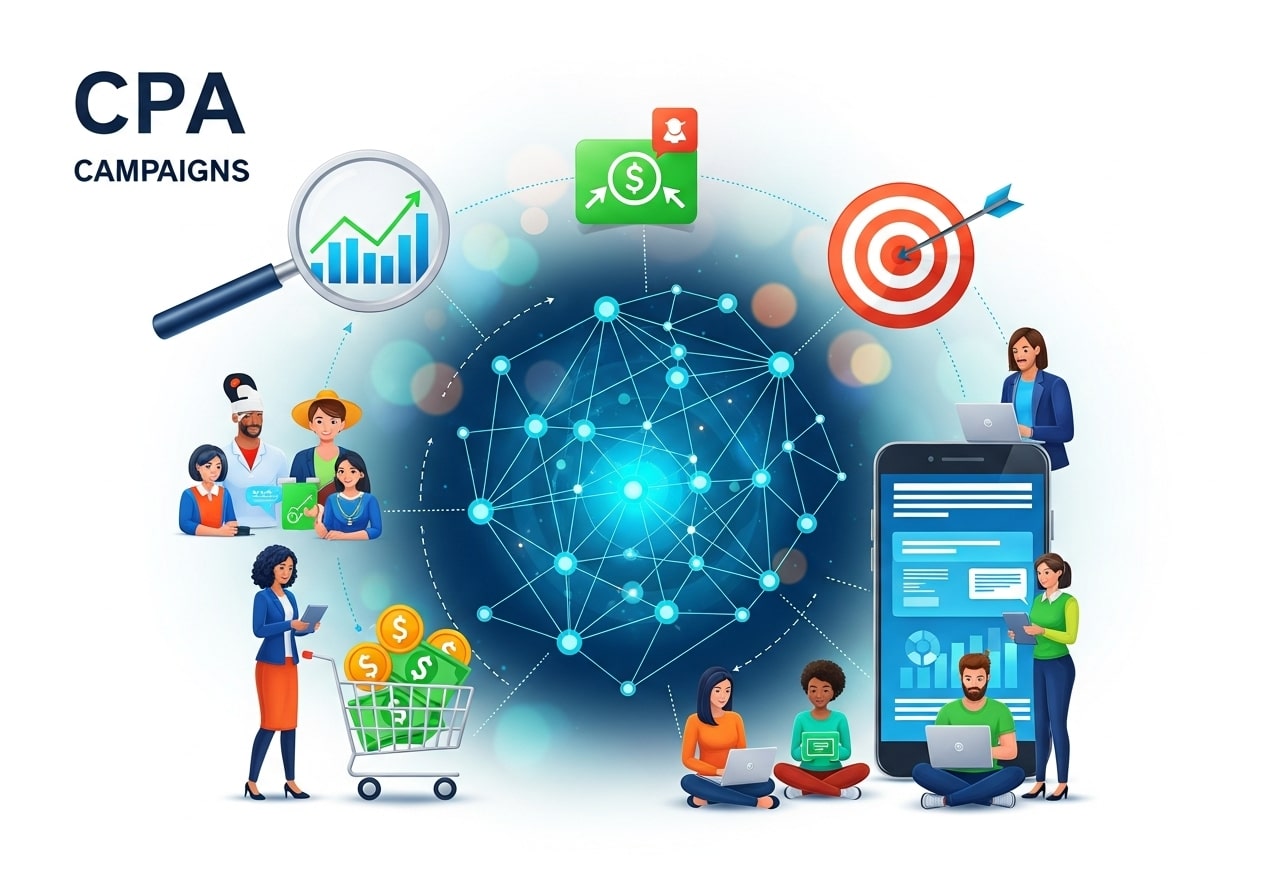
Effective CPA campaigns require strategic planning, consistent testing, and ongoing optimization. Start by selecting offers that match your traffic sources and audience demographics.
Offer Selection Strategy
Choose offers based on several factors: payout rates, conversion requirements, geographic targeting, and approval ratings. Beginners should start with simpler offers like email submits or mobile app installs before progressing to higher-value lead generation offers.
Test multiple offers within the same vertical to identify top performers. Some offers that appear similar may have significantly different conversion rates due to advertiser requirements or landing page quality.
Traffic Source Selection
Successful CPA marketing requires matching traffic sources to offer types. Social media traffic might convert well for mobile app installs but poorly for insurance leads. Search engine traffic often performs well for educational and financial offers.
Popular CPA traffic sources include:
- Paid search advertising (Google Ads, Bing Ads)
- Social media advertising (Facebook, Instagram, TikTok)
- Native advertising (Outbrain, Taboola)
- Email marketing
- Content marketing and SEO
- Influencer partnerships
Landing Page Optimization
High-converting landing pages are essential for CPA success. Focus on clear value propositions, minimal form fields, and compelling calls-to-action. A/B test different headlines, images, and form layouts to improve conversion rates.
Mobile optimization is particularly important since many CPA offers receive significant mobile traffic. Ensure your landing pages load quickly and display properly on all device types.
Tracking and Analytics for CPA Marketing
Accurate tracking is fundamental to CPA marketing success. You need to monitor which traffic sources, landing pages, and offers generate the most profitable conversions.
Conversion Tracking Setup
Most CPA networks provide tracking pixels or postback URLs that record conversions when users complete desired actions. Implement these tracking methods correctly to ensure you receive credit for all valid conversions.
Use additional tracking platforms like Voluum, ClickMagick, or BeMob to gain deeper insights into your campaign performance. These tools can track user behavior throughout the conversion funnel and identify optimization opportunities.
Key Performance Metrics
Monitor essential metrics including:
- Conversion Rate: Percentage of visitors who complete the desired action
- Earnings Per Click (EPC): Average earnings generated per visitor
- Return on Ad Spend (ROAS): Revenue generated compared to advertising costs
- Approval Rate: Percentage of conversions approved by advertisers
Track these metrics by traffic source, offer, and time period to identify trends and optimization opportunities.
Scaling Your CPA Marketing Business
Once you identify profitable campaigns, focus on scaling them systematically while maintaining profitability.
Horizontal Scaling
Expand successful campaigns by testing similar offers, targeting new geographic regions, or exploring additional traffic sources. If a mobile app install offer performs well on Facebook, test it on Instagram, TikTok, or Google Ads.
Vertical Scaling
Increase budgets on profitable campaigns gradually while monitoring performance metrics. Rapid budget increases can sometimes decrease profitability due to increased competition or audience saturation.
Diversification Strategies
Build a portfolio of profitable campaigns across different verticals and traffic sources. This reduces risk and provides more stable income streams. Avoid over-dependence on single offers or traffic sources that could disappear without notice.
Common CPA Marketing Mistakes to Avoid
Learning from common mistakes can accelerate your path to profitability and help you avoid costly errors.
Compliance Issues
Violating advertiser requirements or network policies can result in account suspensions and lost commissions. Read offer details carefully and follow all promotional guidelines. Common violations include using misleading advertising copy, targeting prohibited demographics, or sending low-quality traffic.
Poor Traffic Quality
Focus on sending engaged, interested visitors rather than maximizing volume with irrelevant traffic. Advertisers track conversion quality and may reject affiliates who consistently send poor leads.
Inadequate Testing
Successful CPA marketing requires continuous testing of offers, traffic sources, and landing pages. Avoid making assumptions about what will work—let data guide your decisions.
Neglecting Mobile Optimization
Mobile traffic represents a significant portion of most CPA verticals. Ensure your landing pages and tracking systems work flawlessly on mobile devices.
Building Long-Term Success in CPA Marketing
Sustainable CPA marketing success requires treating it as a legitimate business rather than a quick money-making scheme.
Relationship Building
Develop strong relationships with CPA network managers who can provide exclusive offers, higher payouts, and valuable insights. Successful affiliates often receive preferential treatment and early access to new opportunities.
Continuous Learning
Stay updated on industry trends, new traffic sources, and changing regulations. Join affiliate marketing forums, attend conferences, and network with other successful marketers.
Business Infrastructure
Implement proper business practices, including financial tracking, tax planning, and legal compliance. Consider forming a business entity to protect personal assets and optimize tax obligations.
Your Next Steps in CPA Affiliate Marketing
CPA affiliate marketing provides an accessible entry point into performance-based marketing with significant income potential. Success requires understanding the fundamentals, choosing appropriate offers and traffic sources, and consistently optimizing campaigns based on data.
Start by applying to reputable CPA networks and selecting simple offers that match your current traffic sources or marketing skills. Focus on learning the basics before attempting to scale or tackle complex, high-payout offers.
Remember that building a profitable CPA marketing business takes time and persistence. Most successful affiliates experience failures and setbacks before achieving consistent profitability. Use these experiences as learning opportunities rather than reasons to quit.
Begin your CPA marketing journey by researching networks that accept beginners, identifying offers in verticals that interest you, and developing a traffic generation strategy. With consistent effort and strategic thinking, you can build a thriving CPA affiliate marketing business.
Frequently Asked Questions (FAQ)
1. What does CPA stand for in affiliate marketing?
CPA stands for Cost Per Action. In CPA affiliate marketing, affiliates earn commissions when users complete a specific action such as submitting a form, signing up for a free trial, installing an app, or registering for an account. A purchase is not required for the affiliate to earn money.
2. Is CPA affiliate marketing suitable for beginners?
Yes, CPA affiliate marketing is suitable for beginners because it focuses on free or low-commitment actions. Since users are not required to buy anything, conversion rates are often higher, making it easier for new marketers to generate their first commissions while learning traffic and optimization skills.
3. How much money can you make with CPA marketing?
Earnings from CPA marketing vary depending on traffic quality, offer selection, and scaling ability. Beginners may earn a few hundred dollars per month, while experienced affiliates who run optimized campaigns at scale can generate thousands of dollars monthly or more.
4. Do I need a website to do CPA marketing?
A website is not mandatory for CPA marketing. Many affiliates promote offers through paid advertising, social media, email marketing, or landing pages. However, having a website can help build credibility, collect leads, and support long-term growth.
5. What are the best CPA offers for beginners?
The best CPA offers for beginners are those with simple conversion requirements, such as email submissions, ZIP code submits, mobile app installs, and free trial signups. These offers usually convert well and have fewer restrictions compared to high-value lead generation offers.
6. How do CPA networks track conversions?
CPA networks track conversions using tracking pixels, postback URLs, or server-to-server tracking systems. When a user completes the required action, the system automatically attributes the conversion to the affiliate and records it in the network dashboard.
7. What traffic sources work best for CPA marketing?
The best traffic sources depend on the offer type, but common options include search engine advertising, social media ads, native advertising platforms, email marketing, and content-driven SEO traffic. Successful CPA marketers match traffic sources with offers that align with user intent.
8. Why are some CPA conversions not approved?
CPA conversions may be rejected if the leads are low quality, contain fake or duplicate information, violate offer rules, or come from prohibited traffic sources. Maintaining compliance and sending genuine, relevant traffic helps improve approval rates.
9. Is CPA marketing legal and ethical?
CPA marketing is legal and ethical when affiliates follow advertiser guidelines, avoid misleading claims, respect user privacy, and comply with advertising platform policies and regulations. Ethical practices are essential for long-term success.
10. How long does it take to see results with CPA marketing?
Some CPA campaigns can generate results within days, especially when using paid traffic. However, consistent profitability usually takes time, testing, and optimization. Most successful affiliates achieve stable results after several weeks or months of focused effort.